Time To Pick Your Puppy: The Vegetable Patch Edition
It seems like just yesterday we were welcoming our Garden Patch puppies into the world—tiny black and white bundles who quickly earned names like Kale, Spinach, Tomato, Carrot, Radish, and the rest of our little vegetable garden. Since then, they've grown into confident, curious, and engaging young puppies, each developing their own unique personality while preparing for the next chapter of their lives.
Over the past seven weeks, these puppies have been thoughtfully raised through a carefully planned program of Early Neurological Stimulation (ENS), Early Scent Introduction (ESI), Puppy Culture, daily grooming, confidence-building exercises, novel surfaces, household adventures, outdoor exploration, problem-solving opportunities, and age-appropriate socialization. Every experience has been intentionally chosen to help them develop resilience, optimism, adaptability, and the ability to recover quickly from new challenges.
One of my favorite parts of raising a litter is watching those tiny, everyday moments quietly shape the dogs they'll become. A puppy who cautiously investigates something new one day is confidently exploring it just a few days later. A surprising sound quickly becomes background noise. Curiosity replaces hesitation. Confidence grows through experience. Those small victories, repeated hundreds of times over seven weeks, are what lay the foundation for capable, resilient adult dogs.
This litter has been an absolute joy to raise. Veela and Whiskey have produced puppies with wonderful temperaments, thoughtful curiosity, and a genuine desire to engage with the world around them. While each puppy has their own strengths and individual personality, I've been incredibly pleased with how consistently this litter has embraced every new experience we've introduced.
And now we've reached one of the most exciting milestones of the entire process—it's time to Pick Your Puppy.
Over the following pages, you'll find each puppy's temperament evaluation along with my observations and placement recommendations. While the formal temperament evaluation provides an important, objective snapshot of each puppy in a standardized setting, it represents only one piece of the picture. My recommendations are built on seven weeks of daily observations—watching how these puppies learn, recover, solve problems, interact with people and littermates, progress through Puppy Culture, respond to new environments, develop structurally, and mature as individuals.
As you read through the evaluations, I encourage you to keep an open mind. There isn't a "best" puppy—only puppies whose natural strengths, motivations, and personalities make them better suited for different families, lifestyles, and goals. Whether you're looking for a hiking companion, a performance partner, a service dog prospect, or a beloved family member, my goal is to help you find the puppy that is most likely to thrive in your home for the next 12 to 15 years.
Thank you for trusting me to raise these special puppies and for allowing me to be part of such an important decision. It has been a privilege to watch this little garden grow, and I can't wait to help each of these wonderful puppies find the family where they'll continue to flourish. 🌱🐾
Welcome to the Veela x Whiskey Garden Patch litter! Meet the Summer 2026 Standard Poodle puppies and discover each puppy's temperament, personality, and ideal home.
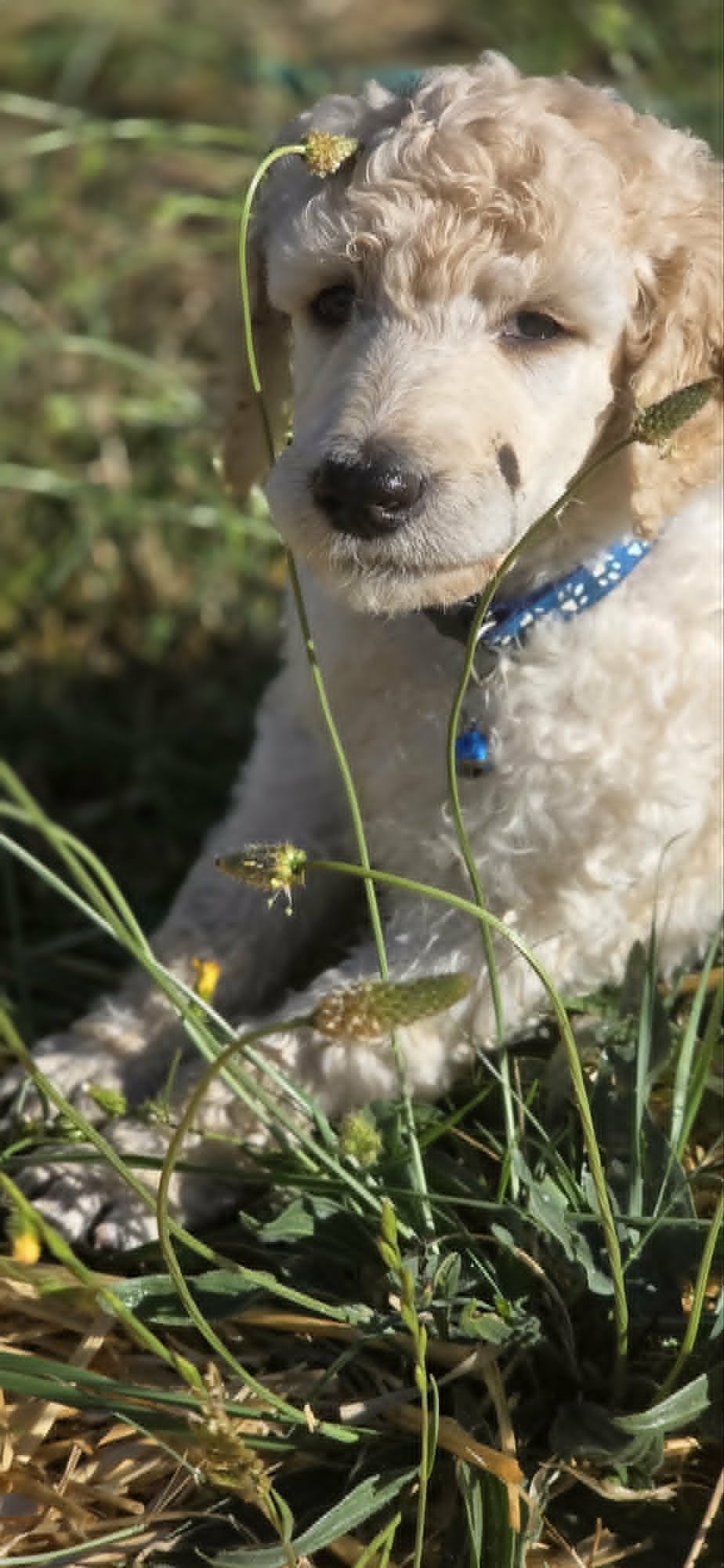
Temperament is more than a single test. We spend weeks observing each puppy in different environments to understand confidence, motivation, recovery, social engagement, problem-solving ability, and overall personality.
A white Standard Poodle puppy enjoying supervised outdoor exploration at Valaurah Farms. Outdoor adventures are an important part of our evaluation process, allowing us to observe each puppy's confidence, curiosity, environmental stability, and natural temperament before matching them with their future family.
This is a long Pupdate with a great deal of important information, so please take your time and read through it carefully.
Once all deposit holders have completed their selections, we will update the Available Puppies page on our website. At this time, we expect to have two puppies available once puppy picks are complete.
We are also looking for the right co-owner or guardian home for one of this litter's top show prospects. If you've ever been interested in participating in conformation, performance sports, or becoming more involved with our breeding program, we'd love to talk with you about whether this opportunity might be a good fit.
After selections are finalized, we will begin following up with applicants who were asked to wait until after puppy picks, along with other families who may be a great fit for one of our future litters.
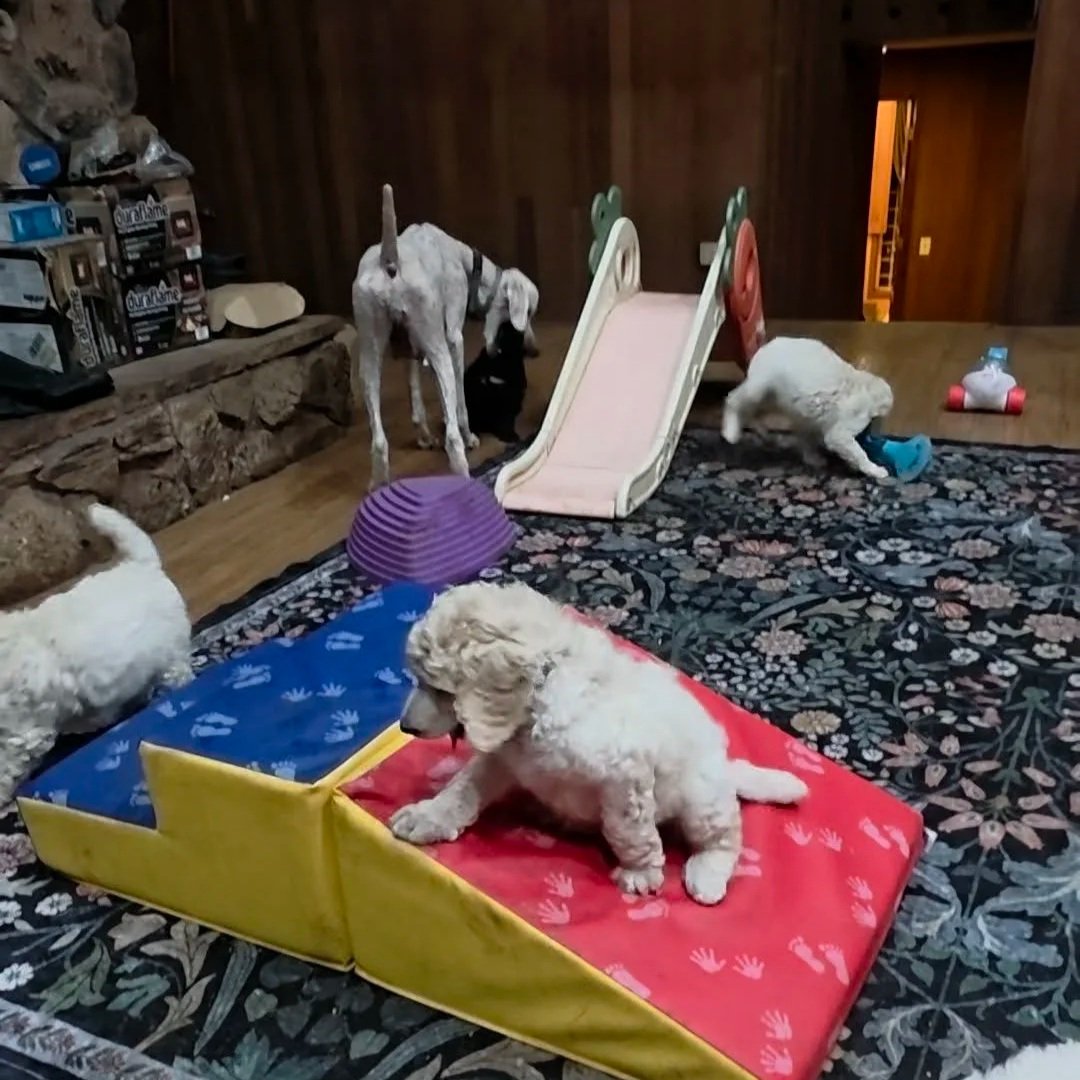
Our Standard Poodle puppies are introduced to a variety of Puppy Culture enrichment activities, including balance equipment, climbing obstacles, novel surfaces, and independent exploration. These early experiences help build confidence, resilience, body awareness, and problem-solving skills.
All of the temperament evaluation data, observation notes, and scoring can be viewed in the spreadsheet below. Simply click the carrot to access the complete temperament evaluation spreadsheet.
As families make their selections, I will update the spreadsheet in real time by highlighting each puppy as it is reserved and adding the selecting family's name to that puppy's column. This allows everyone to follow along with the selection process as it unfolds.
Once all current reservation holders have made their selections, we expect to have two puppies available. We are also looking for the right co-owner for one of this litter's top show prospects. If you're interested in either an available puppy or learning more about our co-ownership program, I'd love to hear from you.

Click the carrot to view the complete temperament evaluation spreadsheet, observation notes, and scoring for each Garden Patch puppy.
How to Read the Temperament Evaluations
Alright… so you probably opened that spreadsheet and immediately thought:
"Whoa… what exactly am I looking at?!" 😂
Fair enough.
There's a lot of information packed into that spreadsheet, and at first glance it can definitely feel overwhelming. The good news is that you don't need to understand every number or every category to make a great decision.
Over the next few sections, I'll walk you through what each category means, how to interpret the scores, and—most importantly—how to use this information alongside my recommendations to find the puppy that's the best fit for your family and your goals.
Remember, the temperament evaluation is just one piece of the puzzle. My recommendations are based not only on the testing itself, but also on seven weeks of living with these puppies every day—watching how they learn, recover, interact, solve problems, and develop into the individuals they are today.
Let's dive in! 🌱🐾
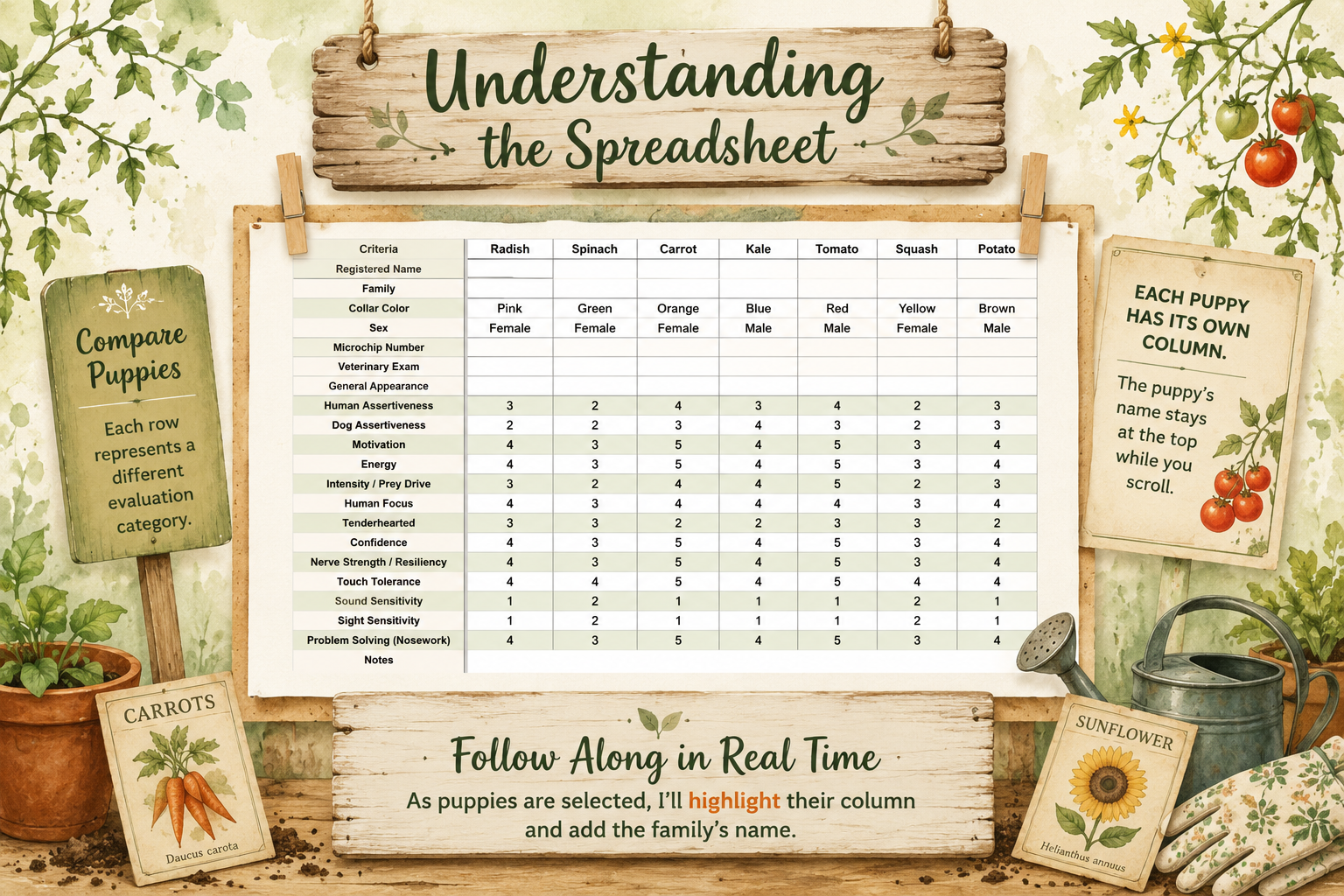
Learn how to read the temperament evaluation spreadsheet, compare puppies side-by-side, and follow along as families make their selections during the Veela x Whiskey Garden Patch litter Pick Your Puppy process.
Learn how to interpret the temperament evaluation results for each Veela x Whiskey Garden Patch puppy and understand how the scores, observations, and seven weeks of development work together to identify the best match for every family.
Puppy Evaluations
Our puppy evaluations are designed to provide insight into how each puppy naturally engages with the world around them while still honoring the puppy’s emotional development, autonomy, and trust.
Rather than relying on rigid or highly stressful testing methods, our evaluation process focuses on observing:
confidence,
engagement,
recovery,
problem solving,
environmental stability,
adaptability,
and workability
in a way that feels natural and supportive for the puppy.
The goal is not to create stress, but rather to provide puppies with opportunities to experience new environments, surfaces, objects, handling, and challenges while observing how they respond, recover, and interact.
Over the years, I have found this style of evaluation to provide a much more complete and realistic picture of each puppy while also aligning closely with our Puppy Culture and puppy raising philosophy.
How Is The Evaluation Performed?
The evaluator begins seated quietly within the testing area while the puppy is brought in and given time to acclimate to the environment.
During these first few moments, the puppy is allowed to:
explore freely,
investigate the environment,
engage with toys,
interact with the evaluator,
or simply pause and observe.
Allowing the puppy choice and autonomy during this stage is extremely important and provides valuable insight into how the puppy naturally engages with new environments and experiences.
Once the puppy is comfortable, the evaluation progresses naturally through a variety of activities and experiences, including:
toy engagement and play,
problem solving,
navigating obstacles and equipment,
exploring novel and unstable surfaces,
recovery from unexpected experiences,
handling and grooming tolerance,
and overall environmental adaptability.
The evaluation is intentionally fluid rather than rigidly scripted. Puppies are worked through exercises in a way that supports confidence and trust while still allowing us to observe meaningful developmental traits and tendencies.
An important part of our evaluation philosophy is recognizing that puppies are individuals with their own autonomy, preferences, and emotional thresholds.
Puppies are given free will throughout the evaluation process and are allowed to communicate:
“I’m unsure,”
“I need a moment,”
or even
“I do not want to do that right now.”
We may guide, encourage, coax, and coach a puppy through an exercise, but we do not force participation. If a puppy chooses not to complete a task, that information is valuable in and of itself — and that choice is respected.
Likewise, if a puppy becomes overly stressed or overwhelmed during the evaluation, we may pause or stop the evaluation entirely to allow the puppy time to decompress and recover.
The goal of the evaluation is not for puppies to “pass or fail,” but rather to better understand how each puppy naturally responds to and interacts with the world around them.
Traits Evaluated
The evaluation looks at both more stable developmental tendencies, as well as traits that are highly influenced by environment, experience, training, and maturity.
Stable Traits
(Scored on a scale of 1–5, with 5 being the highest)
Assertiveness with humans
Assertiveness with other dogs
Motivation
Energy level
Intensity
Human focus
Tenderheartedness
Adjustable Traits
(Scored on a scale of 1–5, with 5 being the highest)
Confidence
Nerve strength / resiliency
Touch tolerance (compliance, not necessarily enjoyment)
For the following sensitivity categories:
1 = little to no sensitivity
5 = high sensitivity
These include:
Sound sensitivity
Sight sensitivity
Learn what each temperament trait measures, why it matters, and how the results help match each Veela x Whiskey Garden Patch puppy with the right family and lifestyle.
Definitions & Understanding the Traits
Human Assertiveness
Human assertiveness is not aggression. Rather, it refers to the puppy’s willingness to engage with and “invade” human space.
Highly assertive puppies are often the dogs that:
climb into your lap,
enthusiastically greet new people,
attempt to investigate everything you are doing,
or try to steal your pizza if given the opportunity 😂
These puppies are typically very socially confident and people-oriented.
Higher levels of human assertiveness are often highly desirable in many working roles, including:
Diabetic Alert Dogs,
Psychiatric Service Dogs,
and Behavior Interruption/Modification work.
However, highly assertive puppies also require clear structure, boundaries, and consistency as they mature. Without guidance, these dogs may become overly pushy, jump on people, or struggle with impulse control simply because they are so eager to engage.
Prey Drive / Intensity
Prey drive is often misunderstood as simply “chasing cats,” but it encompasses much more than that.
In many ways, prey drive is better thought of as:
intensity,
engagement,
focus,
and desire to interact with the environment.
Examples may include:
focusing intensely on toys,
grabbing and shaking toys,
chasing movement,
strong engagement in play,
or persistence when working through tasks.
Dogs with higher prey drive or intensity often excel in:
performance sports,
advanced training,
scent work,
service work,
and other highly engaging activities.
These dogs typically benefit from having appropriate outlets and structured ways to channel that intensity productively and safely.
Nerve Strength / Resiliency
Nerve strength and resiliency refer to a puppy’s comfort level with novelty, environmental pressure, and their ability to recover from uncertainty or stress.
This includes things such as:
recovering from startling experiences,
adapting to new environments,
navigating unfamiliar surfaces,
or bouncing back after being unsure.
Importantly, this is considered an adjustable trait, meaning it can be significantly influenced by:
environment,
training,
exposure,
confidence-building,
and life experience.
A puppy with lower resiliency at seven weeks is not “doomed” to remain that way. Thoughtful handling and continued positive exposure can dramatically improve confidence over time.
Tenderheartedness
Tenderheartedness is one of the more important — and often overlooked — traits we evaluate.
This trait reflects how deeply a dog emotionally absorbs and responds to the emotions and energy of the people around them.
Highly tenderhearted dogs are often:
deeply empathetic,
emotionally aware,
highly connected to their humans,
and strongly affected by emotional environments.
These dogs frequently excel in:
emotional support work,
therapy work,
and deeply bonded companion homes.
However, highly tenderhearted dogs can also struggle in homes with:
chronic high stress,
intense emotional volatility,
frequent yelling,
or highly chaotic environments.
Examples of “big emotions” may include:
PTSD,
severe anxiety,
depression,
loud sporting events,
chaotic family gatherings,
children’s birthday parties,
or emotionally charged households.
These dogs often feel compelled to absorb, respond to, or “fix” the emotional state of their people.
Touch Tolerance
Touch tolerance refers to how a puppy responds to handling that may feel uncomfortable, inconvenient, impolite, or intrusive from the puppy’s perspective.
This is not necessarily about whether the puppy enjoys handling, but rather:
how willing they are to tolerate it,
how they communicate discomfort,
and what choices they make when they dislike the interaction.
Some puppies:
remain joyful and highly tolerant throughout handling,
while others may:
pull away,
freeze,
resist,
or actively attempt to escape.
This trait is especially important when considering:
homes with children,
grooming expectations,
veterinary handling,
and future training goals.
Touch tolerance also provides valuable insight into what a puppy’s continued grooming and handling exposure plan should look like over the coming weeks and months.
The Recordings
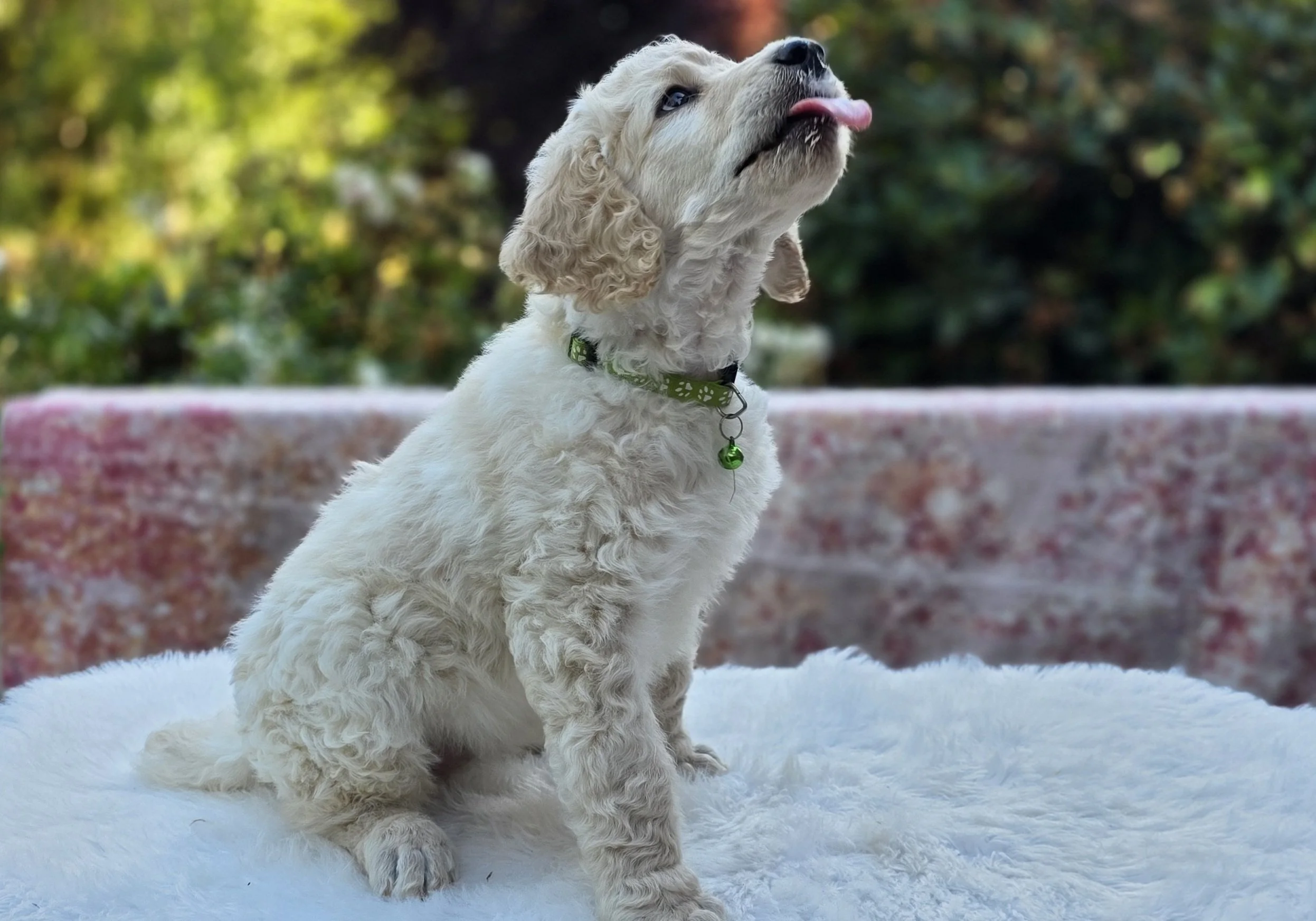
Spinach - Most Likely to Steal the Show
Some puppies catch your eye once.
Spinach never stopped catching mine.
At first, I couldn't quite put my finger on why. She wasn't demanding attention or trying to be the center of every activity. She simply had a way of quietly handling whatever life placed in front of her that kept drawing my attention back to her.
Eventually, it stopped feeling like coincidence.
It started feeling like character.
By the time the puppies were around five weeks old, I found myself thinking the same thing over and over again.
"This is exactly what I've been working toward."
For years, I've had a picture in my mind of the kind of Standard Poodle I wanted to produce. A dog that could walk into almost any environment, quickly assess the situation, confidently adapt, and then happily ask, "Okay...what are we doing today?"
That's Whiskey.
One of my favorite stories about him happened the very first time he tried Barn Hunt. He had never seen a rat tube before. He had no previous training. Within moments, he'd figured out the game and found the rat like he'd been doing it his entire life. Rally was much the same. Very little preparation, yet he walked into the ring, confidently did the work, and qualified.
Once Whiskey understands the assignment, he approaches every challenge with quiet confidence. It's almost as if he walks into the ring saying,
"I dare you not to give me a ribbon."
Throughout her puppyhood, I kept seeing little pieces of that same attitude in Spinach.
Not because she acted exactly like her father.
But because she approached new experiences with the same quiet confidence and adaptability that make Whiskey such a joy to live and work with.
Immediately following her temperament evaluation, Spinach climbed into the truck for an eight-hour drive to Jackie's house for her structural evaluation. She arrived just before midnight, walked into a completely unfamiliar home, and behaved as though she'd been there her entire life.
The next morning brought even more firsts.
She met Jackie for the first time.
She was groomed.
She completed her structural evaluation.
She confidently crossed a section of sidewalk that many puppies find unsettling.
She gaited beautifully for movement evaluation.
Then she climbed back into the truck and made the eight-hour drive home.
At no point did she seem overwhelmed by the constant changes around her.
Each new experience was simply the next thing to figure out.
That ability to process change without becoming rattled is one of the qualities I value most in a puppy. Whether the future involves conformation, performance events, hunting, service work, or simply becoming an exceptional family companion, adaptability is an incredible gift.
Spinach also reinforced something I've believed for a long time:
Exceptional service dogs don't all come in the same package.
Some are bold.
Some are soft.
Some are intensely people-oriented.
Others quietly process the world before engaging.
The common thread isn't a specific personality.
It's resilience, confidence, and the ability to recover quickly from whatever life throws at them.
Spinach demonstrated those qualities over and over again.
As the weeks went on, it became increasingly clear that she represented exactly the direction I wanted my breeding program to continue moving. She wasn't simply checking boxes on a temperament evaluation.
She embodied the kind of dog I'd spent years hoping to produce.
Because of that, Spinach won't be leaving Valaurah Farms.
She'll remain part of our breeding program through our Guardian Home Program, where she'll join Brielle Wold in Eugene. Together they'll begin an exciting journey into conformation while also pursuing service dog training, retrieving, and hunt tests—something I've hoped to see one of our Standard Poodles accomplish for a very long time.
I honestly can't think of a better puppy to introduce Brielle to the sport of dogs. I have a feeling that once Mavis figures out the game, she'll approach every new challenge the same way her father does—with confidence, enthusiasm, and a quiet determination to succeed.
As she begins this next chapter under her new name, Mavis, I honestly can't wait to watch her future unfold.
After all...
Some puppies catch your eye once.
Mavis is the kind you simply can't stop watching.
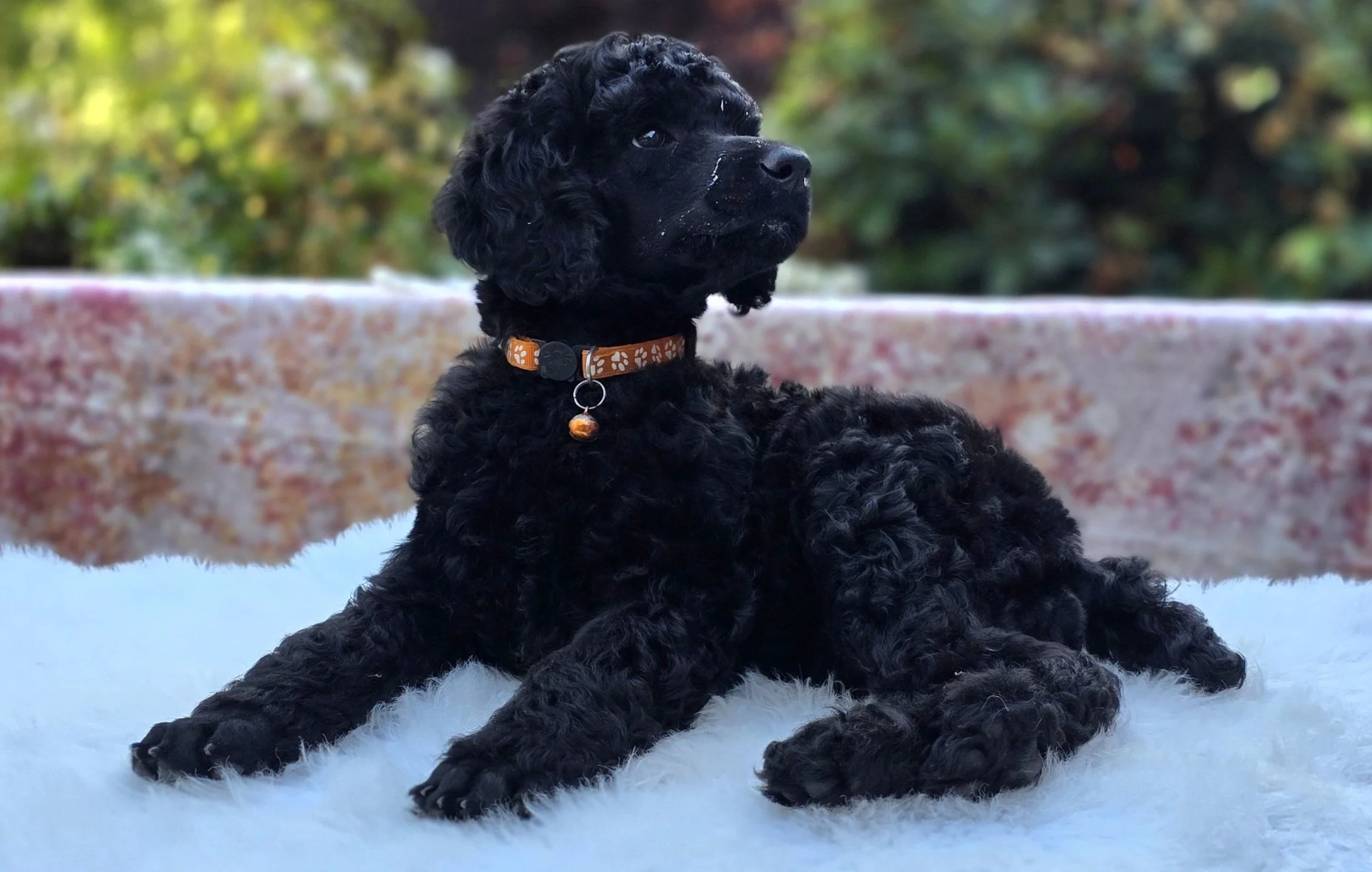
Carrot - Most Likely to Ask, "What's Next?"
Some puppies are content to let life happen around them.
Carrot has been looking for her next adventure from the very beginning.
Whether she was climbing over new obstacles, investigating an unfamiliar toy, or figuring out how to get exactly where she wanted to go, Carrot approached the world with an enthusiasm that was impossible to miss. She wasn't reckless, and she wasn't impulsive. She was simply curious. Every new experience seemed to come with the same question:
"What's next?"
That mindset followed her through nearly every stage of puppyhood.
One of my favorite moments happened during one of our enrichment sessions. We had just introduced a small toddler slide into the puppy pen. Most of the litter cautiously inspected it from every angle, trying to decide whether it was worth climbing.
Carrot skipped the committee meeting.
She marched right up, climbed the steps, and slid down as though she'd been doing it her entire life.
Then she turned around and did it again.
There wasn't hesitation.
There wasn't uncertainty.
There was simply another thing to explore.
That confidence showed up again and again throughout her temperament evaluation.
Carrot possesses the kind of confidence that makes training genuinely fun. She enjoys engaging with people, recovers quickly from surprises, accepts handling naturally, and approaches new challenges with an optimism that's difficult to teach.
She doesn't wait for someone else to solve the puzzle.
She wants to figure it out herself.
That's one of the qualities I admire most about her.
It's also one of the reasons I think she'll thrive in a home that enjoys doing things together. Whether that's hiking new trails, traveling, learning advanced obedience, competing in dog sports, or simply finding new adventures every weekend, Carrot is the kind of dog who will happily ask, "Where are we going today?"
That doesn't mean she's constantly bouncing off the walls.
Like every puppy, she'll need naps, routine, and time to simply be a dog.
But when it's time to learn something new, Carrot lights up.
She has the kind of curiosity that keeps life interesting.
Temperament evaluations suggested she has many of the qualities we value in service and performance prospects: excellent confidence, strong resilience, high motivation, outstanding handling tolerance, and a genuine willingness to work with her person. Those traits open a tremendous number of doors as she grows.
What I love most, though, isn't a score on a temperament evaluation.
It's her outlook.
Some dogs wait for life to happen.
Carrot seems determined to go find it.
I have a feeling that wherever her future family takes her, she'll be standing at the door, tail wagging, asking the same question she's been asking since she was just a few weeks old:
"What's next?"
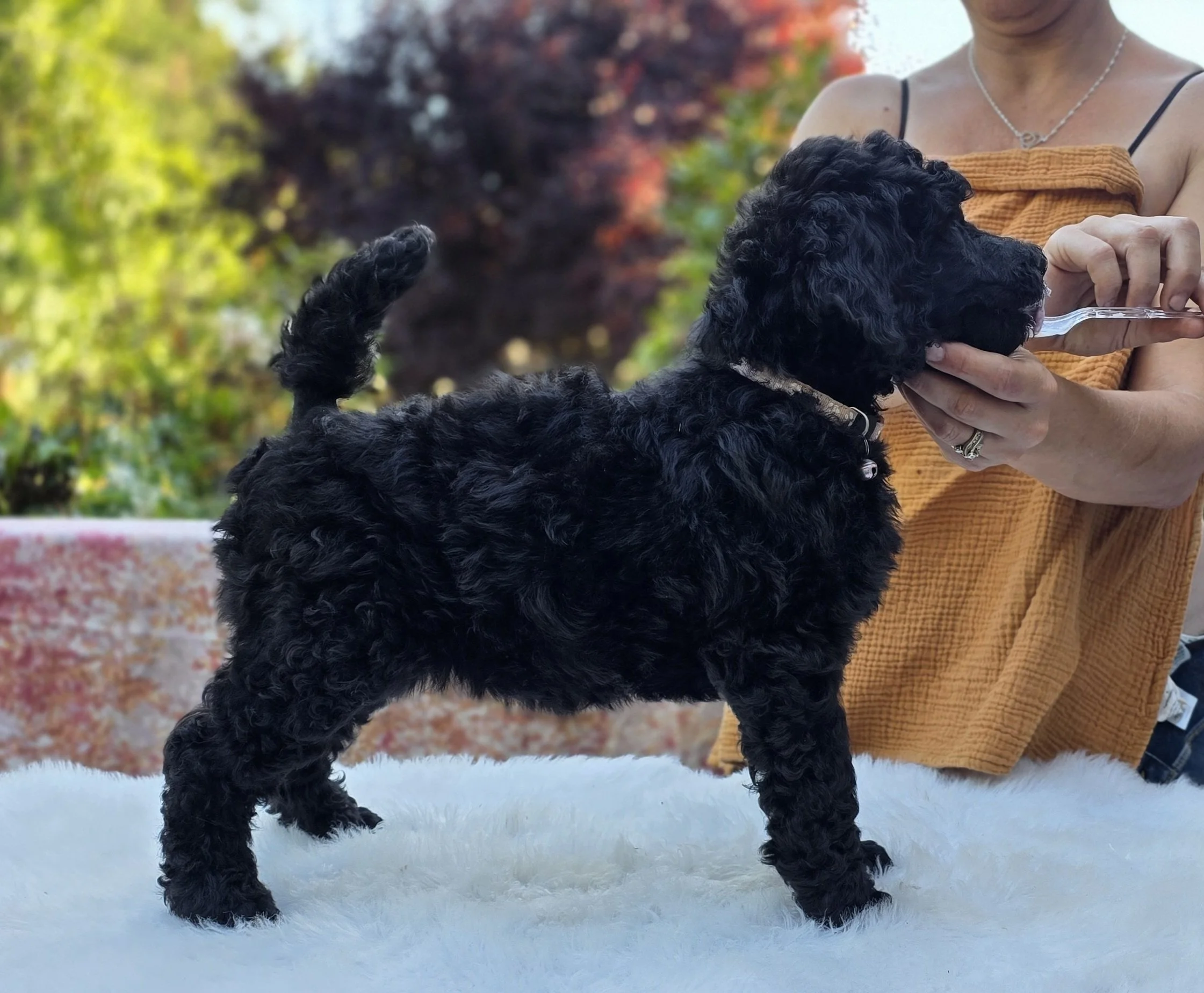
Radish - Most Likely to Be Your Best Teammate
Some puppies want to lead.
Some are perfectly happy to follow.
Radish has always felt like the puppy who wants to work with you.
One of the things I appreciate most about Radish is that she never felt like she was trying to prove anything. She wasn't constantly pushing to be first, nor was she content to simply sit back and watch life happen around her. Instead, she seemed to approach the world with a quiet willingness to engage, learn, and figure things out alongside the people she trusted.
That quality became more apparent as the weeks went on.
She has a wonderful balance of confidence and thoughtfulness. When presented with something new, Radish doesn't simply barrel through it, nor does she become overwhelmed by it. She takes a moment to gather information, processes what she's seeing, and then gets to work.
I find that incredibly appealing.
One of my earliest memories of Radish came during our handling sessions. Like many young puppies, she initially had opinions about some of the new experiences we introduced. But what impressed me wasn't that she had feelings—it was how quickly she worked through them.
Instead of staying worried or holding onto the experience, she'd take a breath, regroup, and move on.
That ability to recover is one of the most important qualities I look for in a puppy.
Life is full of surprises.
The dogs that thrive aren't necessarily the ones that never have questions. They're the ones who can experience something new, process it, and confidently move forward.
Radish did exactly that over and over again.
Throughout her temperament evaluation, she continued to show the kind of qualities that make living and training with a dog enjoyable. She demonstrated good confidence, solid resilience, and a genuine willingness to engage with her person. Rather than demanding constant direction or insisting on doing everything independently, she seemed happiest when the work became a partnership.
That's why I kept coming back to the same word every time I watched her:
Teammate.
Whether your goals involve advanced obedience, hiking together, learning new skills, therapy work, service work, or simply sharing everyday life, Radish strikes me as the kind of dog who genuinely enjoys building that relationship.
She doesn't feel like the puppy who's asking, "Watch what I can do."
She feels like the one asking,
"What are we going to do together?"
To me, that's a very special quality.
The best teammates don't need to be the loudest.
They simply make the people beside them better.
I have a feeling that's exactly the kind of dog Radish is going to become.
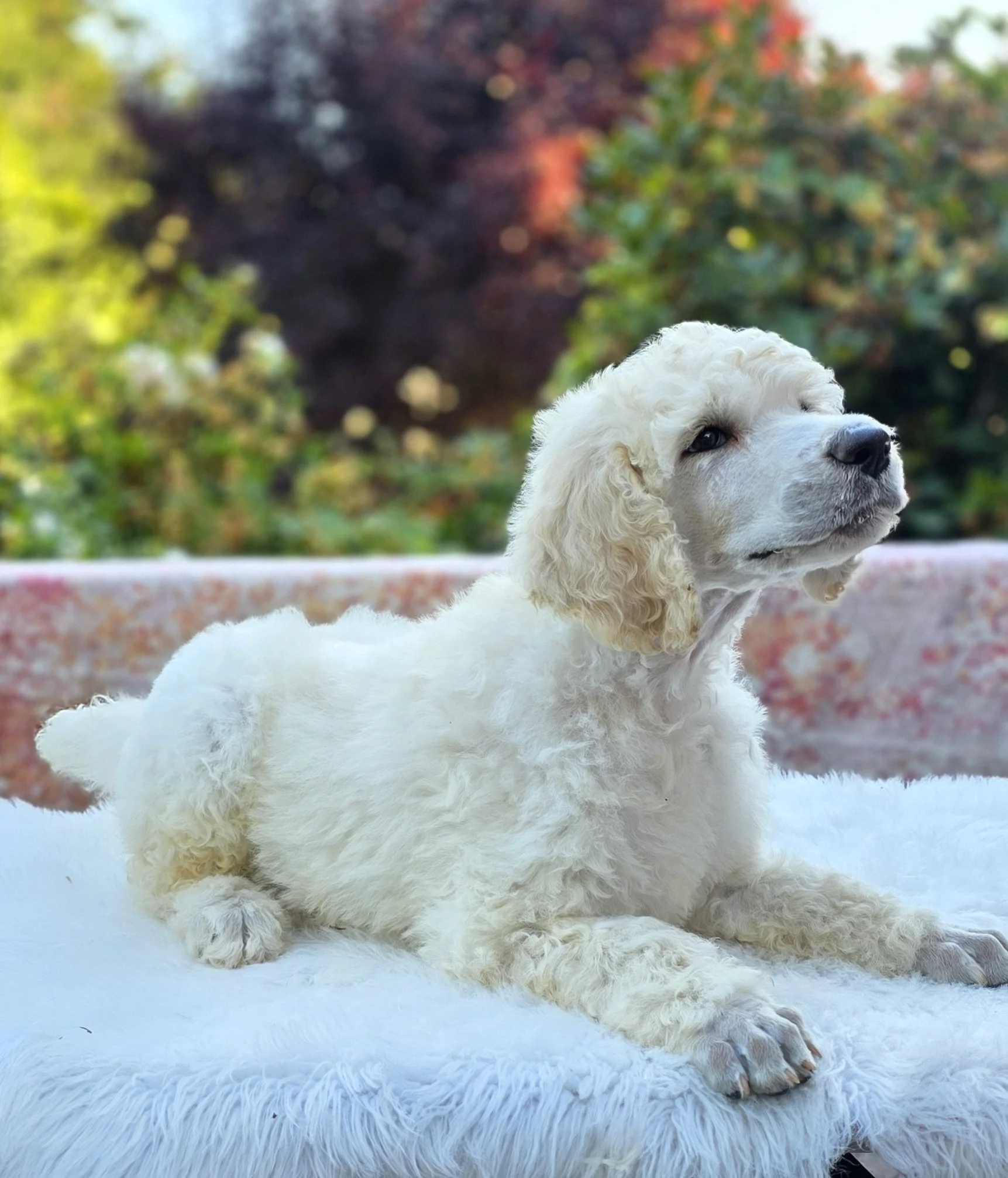
Potato - Most Likely to Walk Beside You Like an Old Friend
From the very beginning, some puppies seem determined to be first. Potato has never been one of them.
He was the last puppy born, and if you've spent any time watching this litter, you've probably noticed he's usually bringing up the rear. If the other puppies had already made it across the yard, Potato was probably still on his way. If everyone had already investigated something new, he was content to get there when he got there.
At first glance, it's easy to assume that means he's slower than his siblings.
I don't think that's what's happening at all.
Potato has never struck me as a puppy who felt the need to compete. He isn't in a rush to prove himself. He's thoughtful, comfortable in his own skin, and perfectly content to let the world unfold before deciding how he'd like to join in.
The more I watched him, the more I realized he wasn't falling behind.
He was simply moving through life at Potato's pace.
One of the things that made me smile throughout these first seven weeks was just how... Potato he was.
He's a big, substantial boy with an easygoing presence that's hard to put into words. He never seemed concerned about what everyone else was doing. He wasn't trying to be first, he wasn't trying to outshine anyone, and he certainly wasn't trying to convince the world he was something he wasn't.
He was just... Potato.
And somehow, that made him incredibly endearing.
One of the things I love most about Standard Poodles is that they don't all express confidence the same way.
Some puppies hit a new experience like the Kool-Aid Man crashing through the wall—"OH YEAH!"
Potato's more the guy who wanders over a few seconds later thinking, "Well... what's everybody doing over here?"
And somehow, I absolutely love that about him.
Not because he's uncertain.
Not because he lacks confidence.
Quite the opposite.
By the time Leslie completed his temperament evaluation, that quiet confidence had already become one of Potato's defining characteristics. His scores reflected exactly the puppy I'd been watching for the previous seven weeks. He demonstrated strong confidence, excellent resilience, wonderful touch tolerance, balanced motivation, and a genuine desire to work with his person. He accepted handling naturally, stayed engaged throughout the evaluation, and approached each new challenge with the same thoughtful steadiness I'd come to expect from him.
Perhaps my favorite part of his evaluation was what it didn't show.
It didn't show a puppy lacking confidence.
It didn't show a puppy hanging back because he was unsure of himself.
Instead, it confirmed exactly what I'd suspected all along.
Potato wasn't bringing up the rear because he couldn't keep up. He simply never felt the need to rush.
That combination of confidence, resilience, human focus, and emotional steadiness opens a tremendous number of doors for his future. I think he'd be an outstanding psychiatric service dog prospect, and if he matures with the structure and health we're hoping for, I could also see him excelling as a mobility service dog. He's intelligent, trainable, and possesses the kind of steady temperament that makes living and working with a dog genuinely enjoyable.
One of the things I've learned over the years is that confidence doesn't always have to announce itself.
Sometimes it's loud.
Sometimes it's bold.
And sometimes it's the puppy who's perfectly content to let everyone else run ahead, knowing he'll get there when he gets there.
When I picture Potato a few years from now, I don't picture him racing a hundred yards ahead on the trail.
I picture him walking with you.
And when you stop to admire the view or take a drink of water, I imagine him sitting down beside you—not because he has to, but because, for him, being with his person has always seemed like the best part of the adventure.
Every litter teaches me something.
This one reminded me that the dogs who leave the biggest mark on our hearts aren't always the ones demanding the spotlight.
Sometimes they're the ones quietly walking beside us, making every ordinary day just a little bit better.
I have a feeling Potato is going to be one of those dogs.
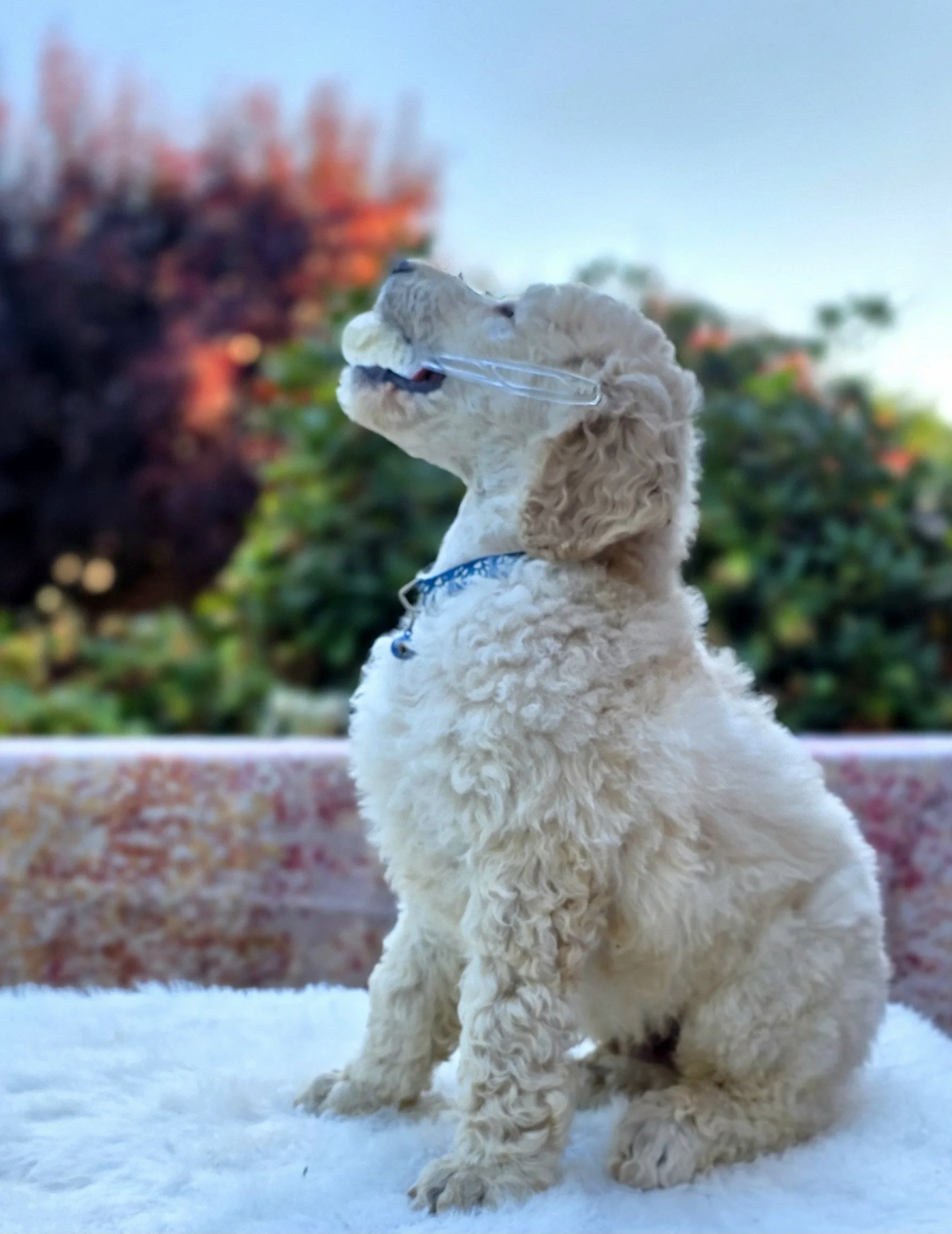
Kale -
Most Likely to Ask, "Can I Come Too?"
Some puppies make you earn their affection.
Kale isn't one of them.
During his temperament evaluation, I found myself laughing and saying, "It's been all kisses, no teeth." That wasn't something I planned to say—it just came out. By the end of the evaluation, though, it had become one of the best ways I could describe him.
Kale genuinely enjoys people.
He's affectionate without being pushy, social without being overwhelming, and happiest when he's included in whatever you're doing.
Throughout his evaluation, I kept thinking the same thing:
"He's so Ronald."
Not because they look alike, but because they share the same quiet desire to simply be with their people. Ronald has never needed to be the center of attention. He's happiest lying nearby, chewing on a bone, or quietly participating in whatever we're doing. Kale has that same quality.
One of my favorite moments came after the evaluation was over. Lesli and I were discussing everything we'd just seen when Kale wandered over carrying a toy, laid down beside her, and quietly entertained himself while we talked.
Nobody called him over.
Nobody asked him to stay.
He simply wanted to be part of the conversation.
The biggest takeaway from Kale's evaluation wasn't his confidence or his willingness to work.
It was how he communicates.
During several exercises, we noticed he wasn't particularly comfortable with direct overhead body pressure. At first glance, someone could mistake that for uncertainty. As we worked through the exercises, though, something became very clear.
The issue wasn't confidence.
It was communication.
The moment we changed how we presented the exercise, everything clicked. Lesli summed it up perfectly when she said,
"He was very willing once he understood the assignment."
To me, that's one of the most valuable things we learned about Kale.
Every dog has a different learning style. Kale wants communication to make sense. Once it does, he is an incredibly willing partner. That's not a weakness—it's information. It tells me he's a dog that wants to work with you rather than simply work for you.
That same theme showed up again during his handling exercises. At one point Lesli commented,
"This isn't just compliance. This is enjoyment."
I couldn't have agreed more.
Kale didn't simply tolerate being handled. He enjoyed it. That will serve him well throughout his life, whether that's grooming, veterinary care, advanced training, or simply living as a well-adjusted family dog.
I also think it makes him a very interesting service dog prospect. Service work isn't just about obedience. It's about partnership, and Kale naturally values that relationship.
I do think his future family needs to understand one thing.
Kale isn't a puppy I'd want trained through intimidation or heavy-handed handling. If your answer to every training question is "because I said so," you're probably going to frustrate each other.
On the other hand, if you enjoy teaching, communicating, and building a true partnership with your dog, I think Kale has an incredible amount to offer.
He has the potential to be an outstanding family companion, an excellent service dog prospect, or a wonderful partner for someone who simply wants a dog that's invested in doing life together.
For me, that's Kale.
He's affectionate.
He's thoughtful.
And more than anything else, he's looking for someone who's willing to have the conversation.
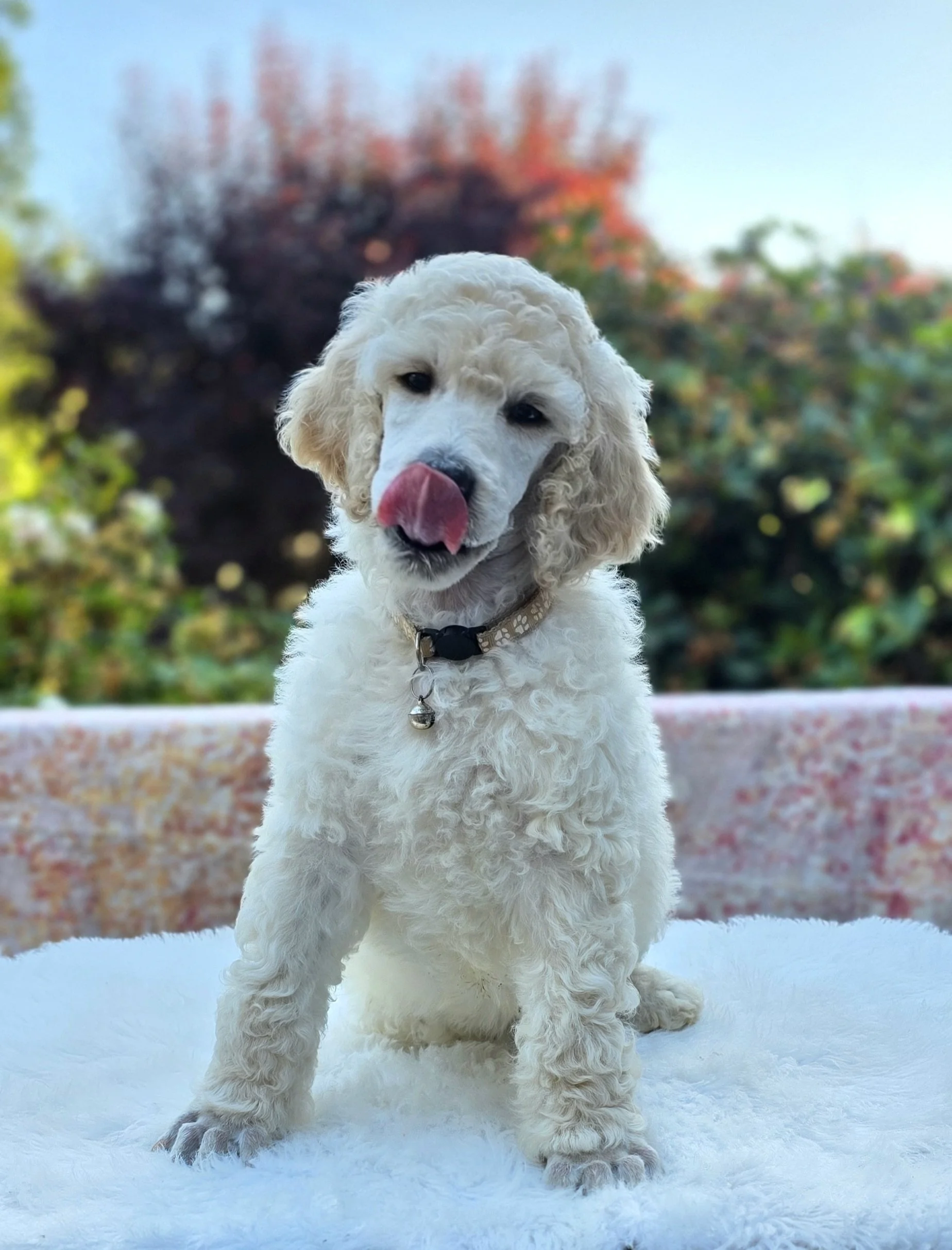
Squash - Most Likely to Jump Right In
Some puppies like to sit back and think about life.
Squash would much rather jump in and see what happens.
From the very beginning of her temperament evaluation, she approached everything directly. Whether it was another dog, a toy, or a new activity, Squash's first instinct was to engage. She wasn't worried about finding the perfect toy or waiting for an invitation. Her attitude was simply, "Let's play."
That enthusiasm carried through the entire evaluation. She happily retrieved toys, delivered some impressive head shakes, and approached every activity with genuine excitement. What I appreciated most wasn't that she loved one particular game—it was that she simply loved to engage. For a trainer, that's a wonderful quality because her motivation comes from the interaction itself rather than a specific reward.
As exciting as that enthusiasm is, the evaluation also highlighted one of the most important things her future family needs to understand.
Squash is a "Don't Reward the Crazy" puppy.
At one point, her excitement briefly got ahead of her. I actually started to suggest we pause and give her a chance to settle, but before I could finish the sentence, she'd already worked through it herself. She slowed down, organized her thoughts, and got right back to work.
That's exactly what I want to see.
She doesn't need someone rescuing her every time she gets excited. She needs someone willing to let her think. If we constantly reward frantic behavior with attention or excitement, we'll create more of it. If we reward the thoughtful dog that appears once her brain catches up, she'll continue making better and better decisions.
That distinction is going to be important throughout her life.
One of the biggest surprises from her evaluation was discovering just how much sensitivity sits underneath all of that confidence.
Squash presents as bold. She approaches life head-on. But she's also very honest about what she's comfortable with and what she isn't.
We saw that most clearly during grooming.
The evening before her evaluation, Squash let me know she wasn't thrilled with parts of the grooming process. She didn't become frantic or escalate the interaction, but she made it very clear she had an opinion about what was happening.
Just as importantly, once the moment passed, she forgave immediately.
To me, that's valuable information.
Every dog communicates differently, and Squash isn't likely to silently tolerate something she finds uncomfortable. She's going to tell you early. That gives us the opportunity to acknowledge what she's communicating while continuing to teach her that grooming, handling, and veterinary care are simply part of life. With consistent practice and fair handling, I expect her comfort with those experiences to continue improving.
That also influences the type of home I think she'll thrive in.
Because Squash is honest about her boundaries, I think she'd do beautifully with respectful older children or teenagers. I would be more cautious placing her in a home with toddlers who are still learning how to appropriately interact with dogs. She deserves a family that will advocate for her while also teaching her how to navigate those situations appropriately.
Throughout the evaluation, Squash also showed me a puppy that genuinely enjoys working with people without becoming dependent on them. She wants to participate, she wants to engage, and she wants to be part of the activity, but she also has enough independence to work through challenges on her own instead of constantly looking to someone else to solve them for her.
I think that combination gives Squash tremendous potential.
She has a lot of dog packed into one little puppy, and I mean that as a compliment. She has the drive and enthusiasm to excel in performance sports, the attitude to be very competitive in the show ring, and the qualities I look for in a service dog prospect. That said, I don't think she's a beginner's project. I'd be looking for an experienced handler, someone working closely with a trainer, or a trainer themselves who can appreciate everything this puppy brings to the table and channel it appropriately.
Squash isn't a puppy who's content sitting on the sidelines.
She wants to train.
She wants to learn.
She wants to be included.
She's looking for a family that will help her channel all of that enthusiasm into becoming the very best version of herself. Do that, and I think you'll have a remarkably capable dog that's just as much fun to train as she is to live with.
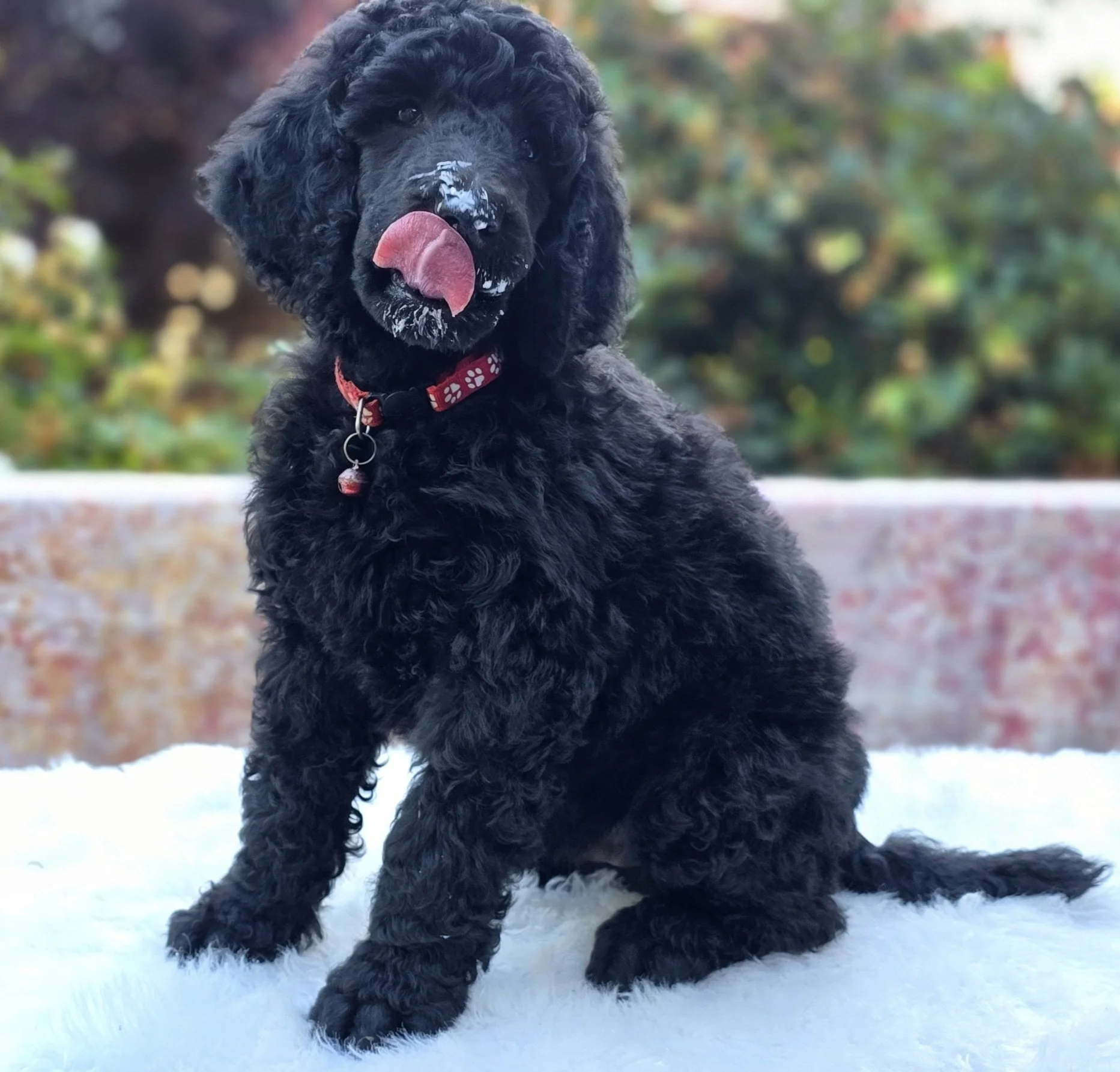
Tomato - Most Likely to be All In
Some puppies pause to figure out what's happening before deciding whether they'd like to participate.
Tomato never saw much point in that.
If life is happening, he's already on his way.
From the moment his temperament evaluation began, Tomato came straight into my lap, eager to engage with whatever was happening next. Toys were exciting. New environments were exciting. Other dogs were exciting. People were especially exciting. He approached every opportunity with confidence and enthusiasm, making it clear that sitting on the sidelines simply isn't part of his personality.
One of the moments that made me smile came during toy play. Tomato happily grabbed toys, shook them with enthusiasm, and brought them back, but it quickly became obvious that the toys weren't the most exciting part of the exercise.
People were.
More than once I found myself thinking, "These toys are cool... but you're better." He genuinely enjoys interaction. The toy is fun, but sharing the experience with someone else is what really captures his attention.
That same attitude carried over into his interactions with the other dogs. Throughout the evaluation, he repeatedly sought out Sparkle, almost inviting her to join him. At one point he tucked himself underneath her, and more than once it felt like he was checking in on what she was doing.
Later, Tomato became convinced that I needed his assistance. His solution involved enthusiastic pawing, digging, and trying to physically "fix" whatever problem he thought I had. His technique left something to be desired, but the intent was unmistakable—he genuinely wanted to be involved. That moment summed him up perfectly. Tomato doesn't just observe the world around him. He throws himself into it with his whole heart.
As the evaluation continued, I also found myself thinking about Crush. Not because they're identical, but because they share that same instinct to throw themselves wholeheartedly into whatever is happening. Dogs like this don't believe in halfway. They're happiest when they're engaged, participating, and part of the action.
Tomato wants to be involved.
That's one of his greatest strengths.
It's also the biggest thing his future family needs to understand.
Tomato has an enormous amount of enthusiasm. He approaches life with confidence, intensity, and a genuine desire to participate. Puppies like him don't need help getting excited about training or engaging with the world.
They need help learning where to put all that enthusiasm.
One of the comments Lesli made during his evaluation immediately caught my attention.
"This is a Magic teach focus."
I couldn't have agreed more.
If you've spent time around Magic, you'll understand exactly what she meant. Magic has never struggled with motivation. His challenge has always been learning where to direct it. Tomato gives me that same impression. He naturally notices everything around him. He wants to investigate it, interact with it, and be part of it.
That isn't something I'd try to change.
I'd simply teach him where to focus.
To me, that's one of the easiest training challenges to solve. It's much easier to teach focus than it is to manufacture enthusiasm in a dog that doesn't naturally have it. Tomato already has all the drive, confidence, and willingness to work. The foundation is there. He simply needs someone to help him organize it.
Another thing that stood out to me during the evaluation was the amount of tenderness underneath all of that confidence. Lesli noted that while Tomato is incredibly assertive, he's also surprisingly tenderhearted. He notices people. He notices other dogs. He wants to engage, interact, and be part of what's happening around him. That combination makes him a very appealing working prospect because he brings both confidence and connection to the table.
I think Tomato has tremendous potential as a service dog prospect, but I would place him with the same caveat I use for several of the higher-drive puppies in this litter. He's best suited for an experienced handler, someone working closely with a qualified trainer, or an established service dog program. He has all the raw material, but he deserves someone who understands how to shape that enthusiasm into purposeful work.
The same is true for family life.
Tomato is a lot of puppy—in all the best ways. He'll thrive in an active home that enjoys training, adventures, and including their dog in everyday life. Because of his confidence and assertiveness, I'd be more cautious placing him with very young children. Respectful older children or teenagers, however, could have an incredible partner.
Tomato isn't a puppy who believes in doing anything halfway.
He'll bring his whole heart, his whole brain, and every ounce of enthusiasm he has to the people he loves.
For the family willing to teach him that excitement and focus can go hand in hand, I think he'll repay them with a lifetime of unwavering commitment. Whether his future is in service work, performance sports, or simply as an active family companion, Tomato is the kind of dog who will always be all in—and he'll inspire the people around him to be, too.
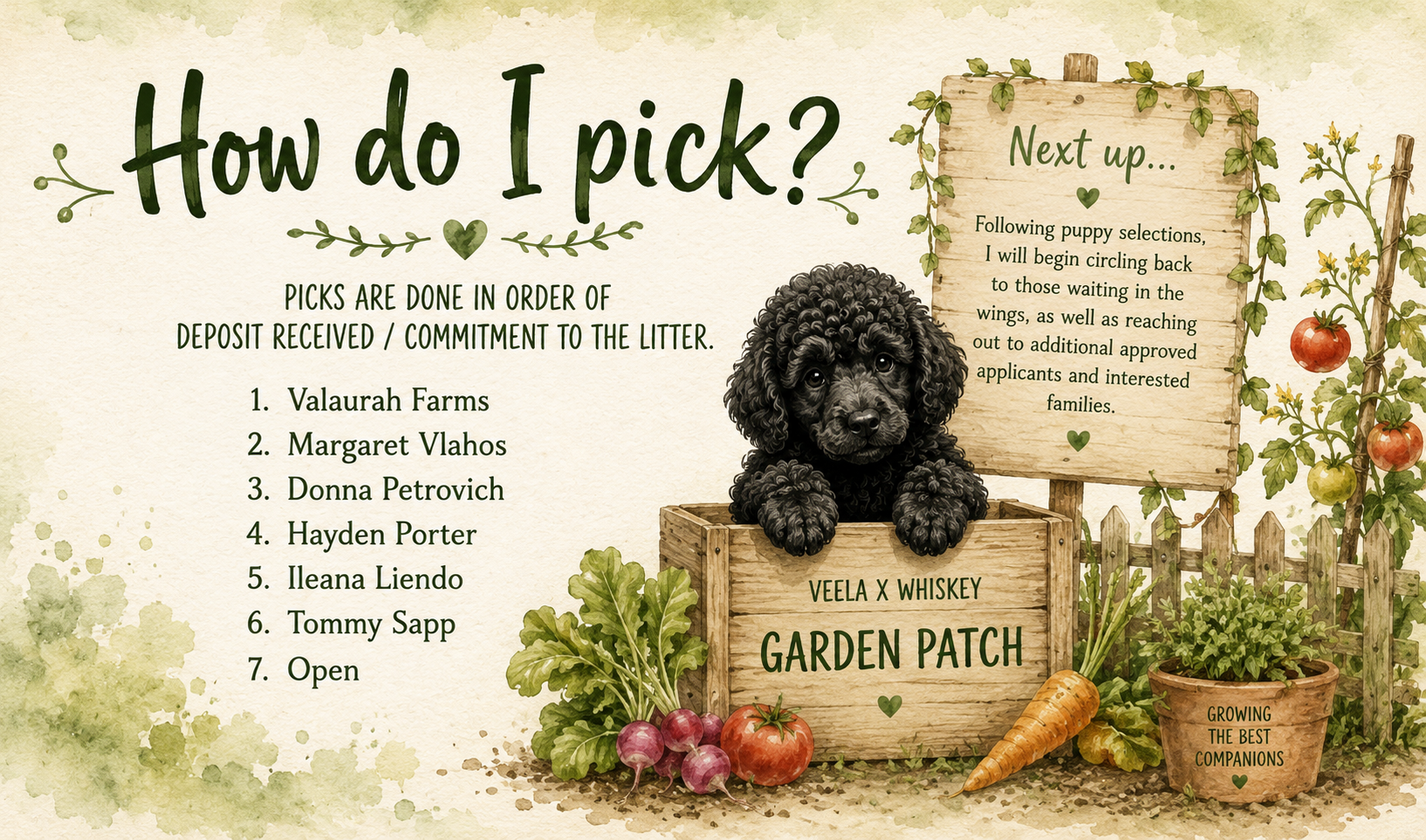
Learn how puppy selections are made, the order of picks, and what to expect during the Veela x Whiskey Garden Patch litter Pick Your Puppy process at Valaurah Farms.
Picks will be done in order of deposit received/commitment to the litter. As a reminder, the order is as follows.
Valaurah Farms
Margaret Vlahos
Donna Petrovich
Hayden Porter
Tommy Sapp
Open
Open
Following puppy selections, I will begin circling back to those who have been “waiting in the wings,” as well as reaching out to additional approved applicants and interested families. Any remaining puppies will then be made available on a first-come, first-served basis.
After receiving this email, I will begin contacting families individually to discuss and confirm selections. For some, this may be as simple as:
“I would like Puppy X, please.”
For others, it may involve a more in-depth phone conversation to discuss temperament, goals, lifestyle, and overall fit.
Please plan to make your final selection and/or have your discussion with me within approximately 36 hours of receiving this information so that we can keep the process moving smoothly for everyone involved.
The master spreadsheet and evaluation document are live and editable on my end. As puppies are selected, I will update the list to reflect their availability status.
I will also be posting updates and puppy selection announcements on the Valaurah Farms Facebook and Instagram pages as families make their choices.
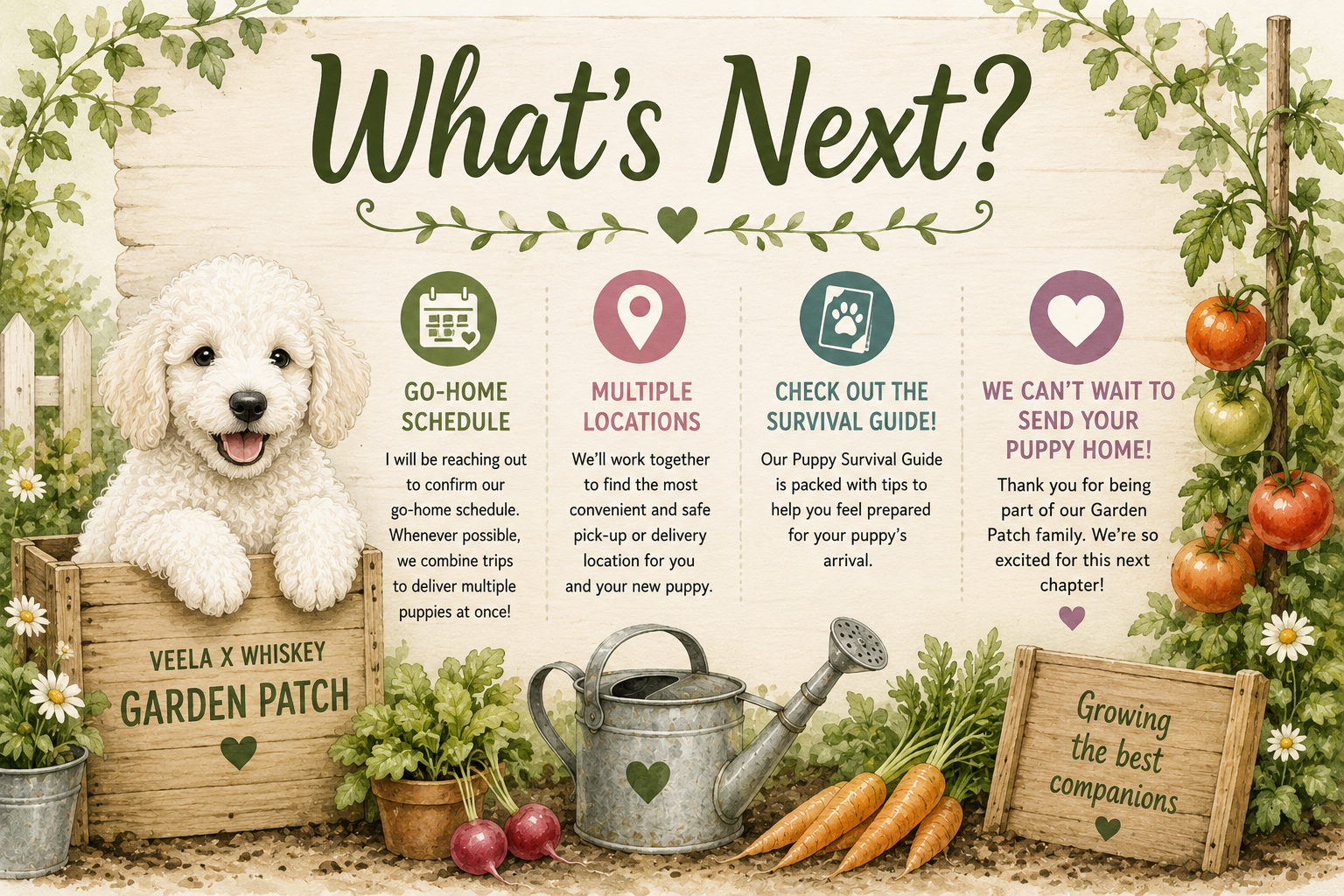
Learn what happens after puppy selections are complete, including go-home scheduling, delivery coordination, and preparing for your new Standard Poodle puppy from the Veela x Whiskey Garden Patch litter.
I will be reaching out to figure out our go-home schedule. It is always nice if we can combine trips to the various places with multiple puppies. But in the meantime, check out the survival guide.