It’s Time To Pick Your Puppy: Hazel & Magic’s Princesses and Princes
Can you believe these puppies are already SEVEN weeks old? It’s hard to believe how quickly the time has gone. It feels like just yesterday they were tiny newborns curled up in my hands — and now here they are, growing into capable, curious little dogs ready to begin the next chapter of their lives.
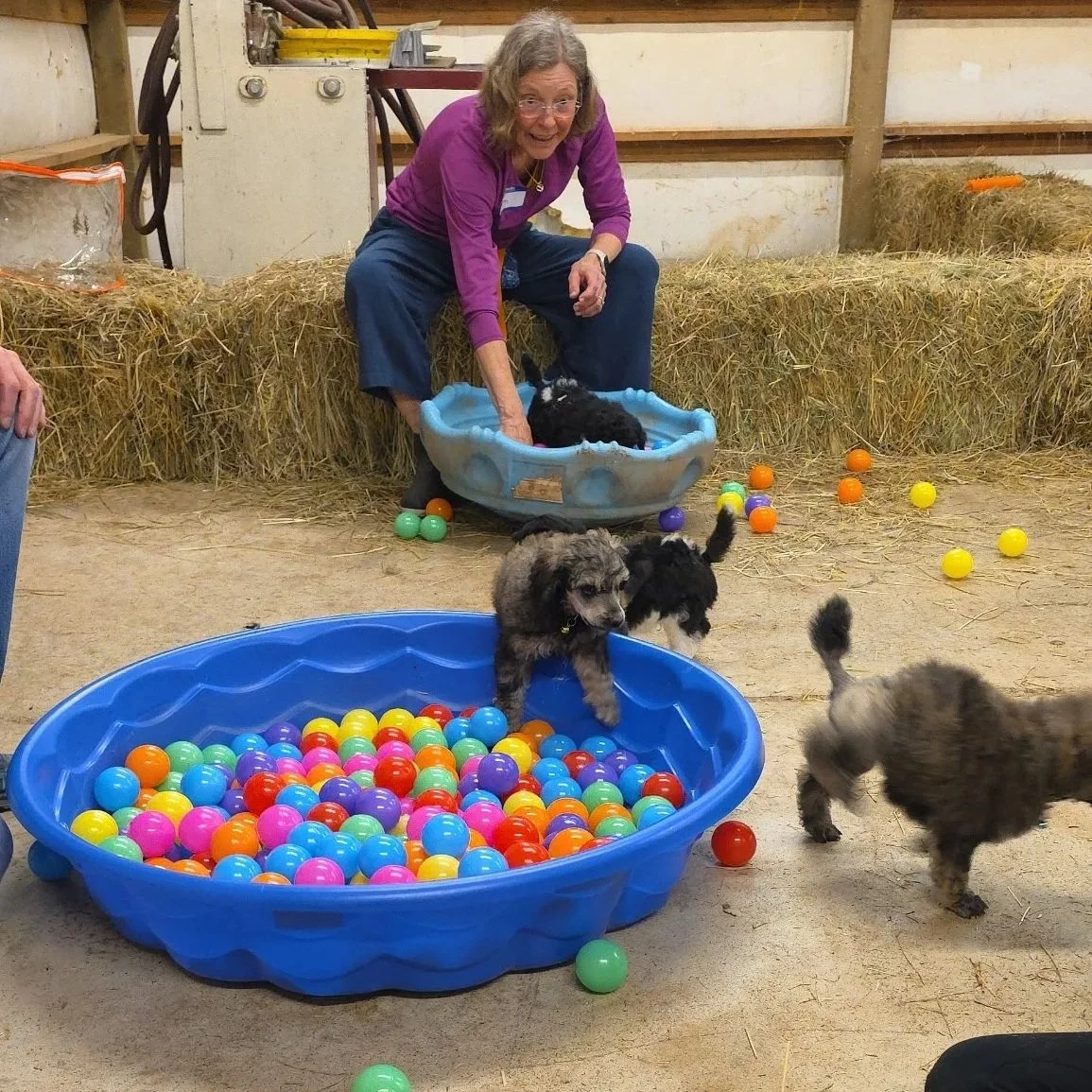
Some of you were able to join us for our Puppy Party, and it was such a joy watching the puppies explore, problem solve, and experience so many new things alongside you. The event was not only incredibly fun, but also a valuable opportunity for the puppies to build confidence and engage with new people and environments in a positive, supportive way.
I am incredibly pleased with how this litter has developed, and their temperament testing reflected the thoughtful foundation that has been built over these past several weeks.
And now, the moment many of you have been waiting for has arrived — it is time to choose your puppy.
Take a deep breath and enjoy this experience. These puppies are still growing and developing every single day, and there is no “perfect” choice — only the puppy whose strengths, temperament, and needs best align with your home and lifestyle. Trust the process, keep an open mind, and know that the puppy you choose will bring immense joy, companionship, and meaning into your life.
This is a long pupdate with a lot of important information, so please take your time and read through everything carefully.
Once all deposit holders have made their selections, we will update the Available Puppies page on our website. I do anticipate that a few puppies may be available after puppy picks are complete.
After our current deposit holders have chosen, we will begin following up with applicants who were asked to wait until after puppy selections, as well as any other families who may be a good fit.
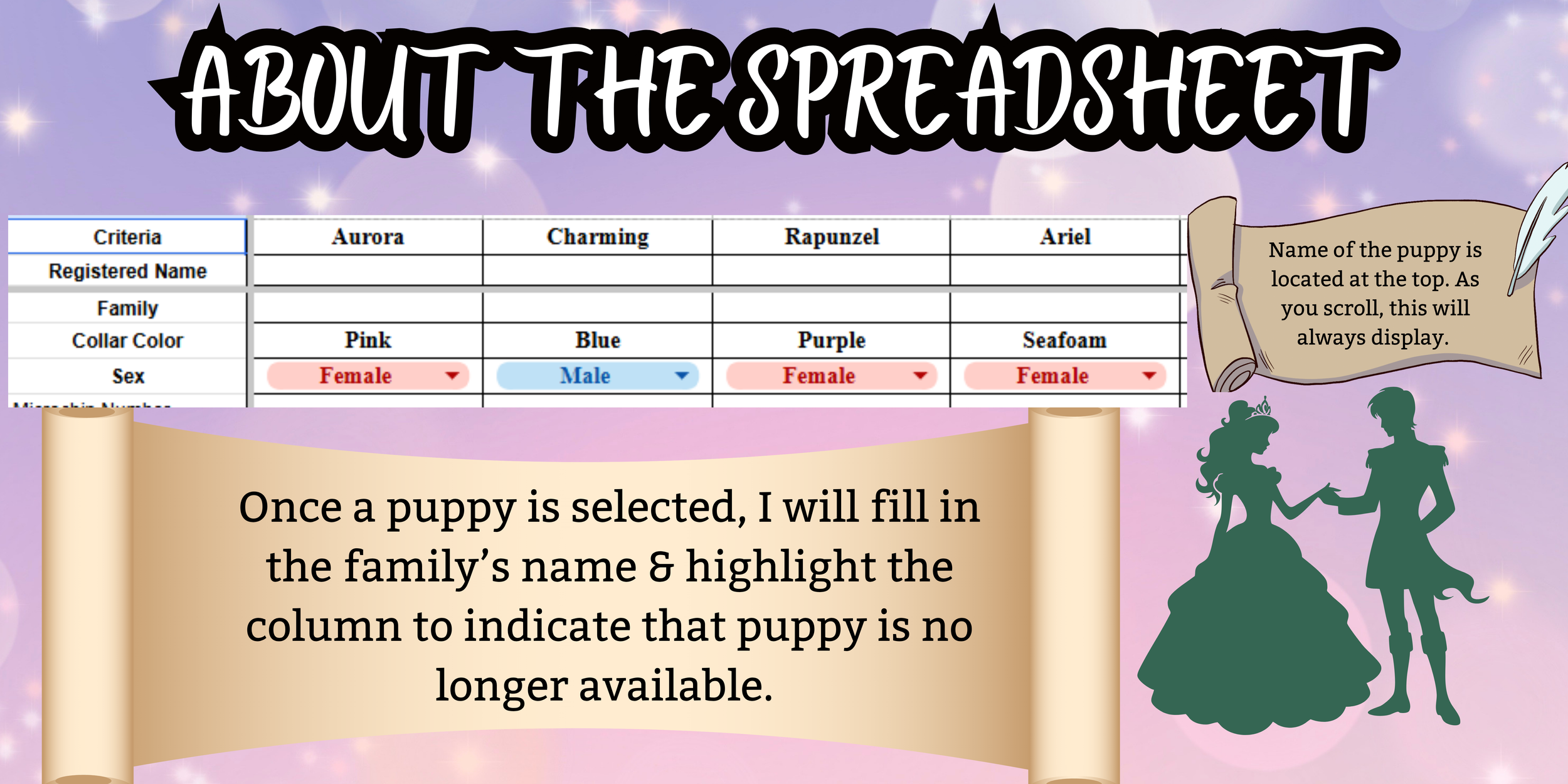
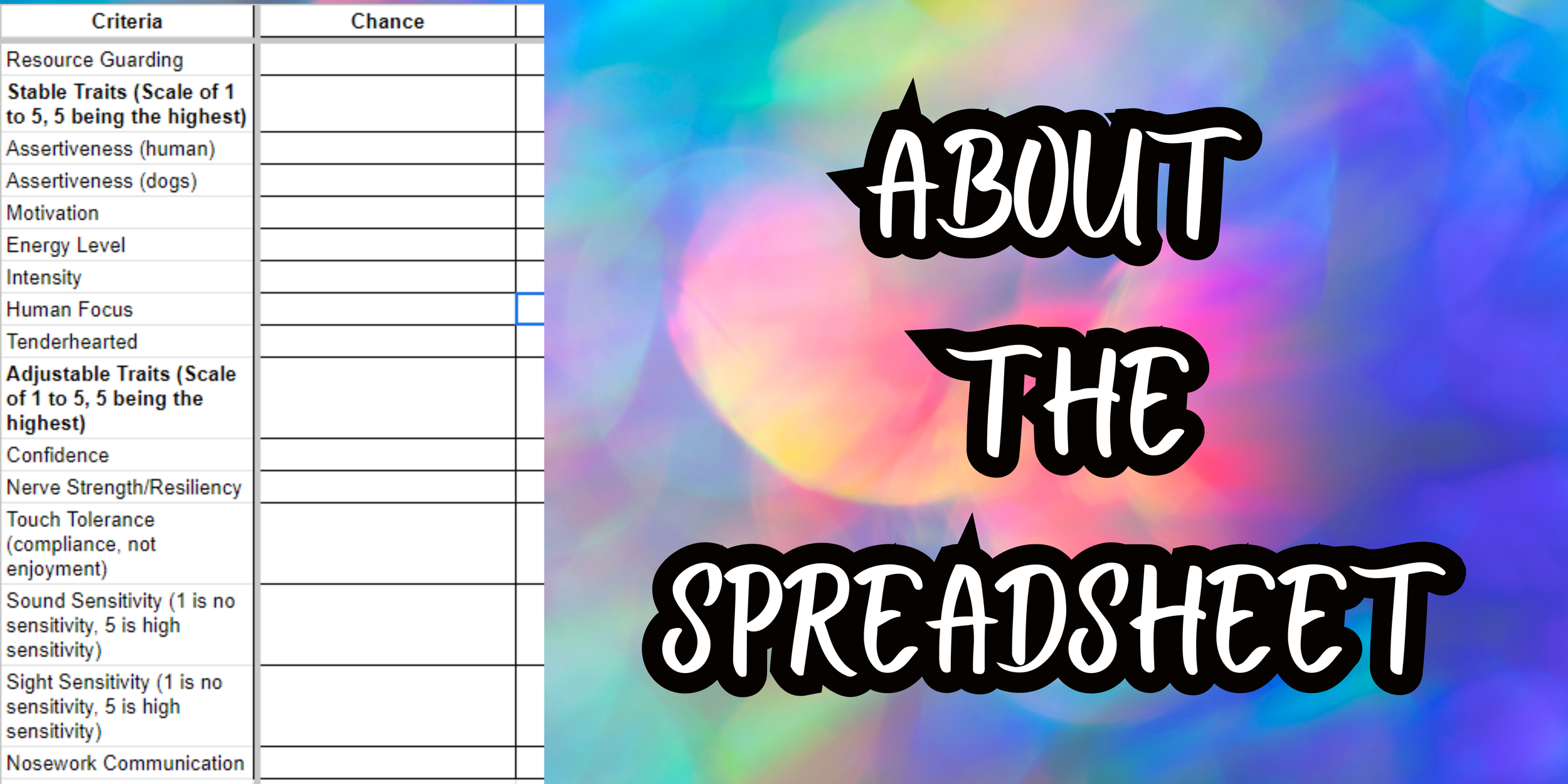
All gathered data and evaluation information can be viewed in the spreadsheet below. Click the button to access the spreadsheet.
As families make their selections, I will update the spreadsheet by highlighting each chosen puppy and adding the selecting family’s name to that puppy’s column.
Once all current reservation holders have made their selections, any remaining puppy(ies) will be made available to interested families and applicants.

Alright… so you probably opened that spreadsheet and immediately went:
“WOAH… what exactly am I looking at?!”
Fair enough 😂
There’s a lot of information there, and at first glance it can definitely feel overwhelming. Don’t worry — I’m going to walk you through what everything means, how to read it, and most importantly, how to use the information to help guide your decision-making process.
Puppy Evaluations
Our puppy evaluations are designed to provide insight into how each puppy naturally engages with the world around them while still honoring the puppy’s emotional development, autonomy, and trust.
Rather than relying on rigid or highly stressful testing methods, our evaluation process focuses on observing:
confidence,
engagement,
recovery,
problem solving,
environmental stability,
adaptability,
and workability
in a way that feels natural and supportive for the puppy.
The goal is not to create stress, but rather to provide puppies with opportunities to experience new environments, surfaces, objects, handling, and challenges while observing how they respond, recover, and interact.
Over the years, I have found this style of evaluation to provide a much more complete and realistic picture of each puppy while also aligning closely with our Puppy Culture and puppy raising philosophy.
How Is The Evaluation Performed?
The evaluator begins seated quietly within the testing area while the puppy is brought in and given time to acclimate to the environment.
During these first few moments, the puppy is allowed to:
explore freely,
investigate the environment,
engage with toys,
interact with the evaluator,
or simply pause and observe.
Allowing the puppy choice and autonomy during this stage is extremely important and provides valuable insight into how the puppy naturally engages with new environments and experiences.
Once the puppy is comfortable, the evaluation progresses naturally through a variety of activities and experiences, including:
toy engagement and play,
problem solving,
navigating obstacles and equipment,
exploring novel and unstable surfaces,
recovery from unexpected experiences,
handling and grooming tolerance,
and overall environmental adaptability.
The evaluation is intentionally fluid rather than rigidly scripted. Puppies are worked through exercises in a way that supports confidence and trust while still allowing us to observe meaningful developmental traits and tendencies.
An important part of our evaluation philosophy is recognizing that puppies are individuals with their own autonomy, preferences, and emotional thresholds.
Puppies are given free will throughout the evaluation process and are allowed to communicate:
“I’m unsure,”
“I need a moment,”
or even
“I do not want to do that right now.”
We may guide, encourage, coax, and coach a puppy through an exercise, but we do not force participation. If a puppy chooses not to complete a task, that information is valuable in and of itself — and that choice is respected.
Likewise, if a puppy becomes overly stressed or overwhelmed during the evaluation, we may pause or stop the evaluation entirely to allow the puppy time to decompress and recover.
The goal of the evaluation is not for puppies to “pass or fail,” but rather to better understand how each puppy naturally responds to and interacts with the world around them.
Traits Evaluated
The evaluation looks at both more stable developmental tendencies, as well as traits that are highly influenced by environment, experience, training, and maturity.
Stable Traits
(Scored on a scale of 1–5, with 5 being the highest)
Assertiveness with humans
Assertiveness with other dogs
Motivation
Energy level
Intensity
Human focus
Tenderheartedness
Adjustable Traits
(Scored on a scale of 1–5, with 5 being the highest)
Confidence
Nerve strength / resiliency
Touch tolerance (compliance, not necessarily enjoyment)
For the following sensitivity categories:
1 = little to no sensitivity
5 = high sensitivity
These include:
Sound sensitivity
Sight sensitivity
Definitions & Understanding the Traits
Human Assertiveness
Human assertiveness is not aggression. Rather, it refers to the puppy’s willingness to engage with and “invade” human space.
Highly assertive puppies are often the dogs that:
climb into your lap,
enthusiastically greet new people,
attempt to investigate everything you are doing,
or try to steal your pizza if given the opportunity 😂
These puppies are typically very socially confident and people-oriented.
Higher levels of human assertiveness are often highly desirable in many working roles, including:
Diabetic Alert Dogs,
Psychiatric Service Dogs,
and Behavior Interruption/Modification work.
However, highly assertive puppies also require clear structure, boundaries, and consistency as they mature. Without guidance, these dogs may become overly pushy, jump on people, or struggle with impulse control simply because they are so eager to engage.
Prey Drive / Intensity
Prey drive is often misunderstood as simply “chasing cats,” but it encompasses much more than that.
In many ways, prey drive is better thought of as:
intensity,
engagement,
focus,
and desire to interact with the environment.
Examples may include:
focusing intensely on toys,
grabbing and shaking toys,
chasing movement,
strong engagement in play,
or persistence when working through tasks.
Dogs with higher prey drive or intensity often excel in:
performance sports,
advanced training,
scent work,
service work,
and other highly engaging activities.
These dogs typically benefit from having appropriate outlets and structured ways to channel that intensity productively and safely.
Nerve Strength / Resiliency
Nerve strength and resiliency refer to a puppy’s comfort level with novelty, environmental pressure, and their ability to recover from uncertainty or stress.
This includes things such as:
recovering from startling experiences,
adapting to new environments,
navigating unfamiliar surfaces,
or bouncing back after being unsure.
Importantly, this is considered an adjustable trait, meaning it can be significantly influenced by:
environment,
training,
exposure,
confidence-building,
and life experience.
A puppy with lower resiliency at seven weeks is not “doomed” to remain that way. Thoughtful handling and continued positive exposure can dramatically improve confidence over time.
Tenderheartedness
Tenderheartedness is one of the more important — and often overlooked — traits we evaluate.
This trait reflects how deeply a dog emotionally absorbs and responds to the emotions and energy of the people around them.
Highly tenderhearted dogs are often:
deeply empathetic,
emotionally aware,
highly connected to their humans,
and strongly affected by emotional environments.
These dogs frequently excel in:
emotional support work,
therapy work,
and deeply bonded companion homes.
However, highly tenderhearted dogs can also struggle in homes with:
chronic high stress,
intense emotional volatility,
frequent yelling,
or highly chaotic environments.
Examples of “big emotions” may include:
PTSD,
severe anxiety,
depression,
loud sporting events,
chaotic family gatherings,
children’s birthday parties,
or emotionally charged households.
These dogs often feel compelled to absorb, respond to, or “fix” the emotional state of their people.
Touch Tolerance
Touch tolerance refers to how a puppy responds to handling that may feel uncomfortable, inconvenient, impolite, or intrusive from the puppy’s perspective.
This is not necessarily about whether the puppy enjoys handling, but rather:
how willing they are to tolerate it,
how they communicate discomfort,
and what choices they make when they dislike the interaction.
Some puppies:
remain joyful and highly tolerant throughout handling,
while others may:
pull away,
freeze,
resist,
or actively attempt to escape.
This trait is especially important when considering:
homes with children,
grooming expectations,
veterinary handling,
and future training goals.
Touch tolerance also provides valuable insight into what a puppy’s continued grooming and handling exposure plan should look like over the coming weeks and months.
The Recordings
Rather than uploading the videos directly to this webpage and slowing down the load time considerably, I have linked each video to the cover photo below. Please click the cover photo for each pup to be taken to Youtube where you can view the videos directly. The scores for this test are found in the sections labeled Stable Traits and Adjustable Traits on the spreadsheet.
I am so impressed with these puppies. Overall they tested fairly consistently with all showing great confidence and human focus. These are some super special puppies and I don’t think there is a “bad” pick among them.
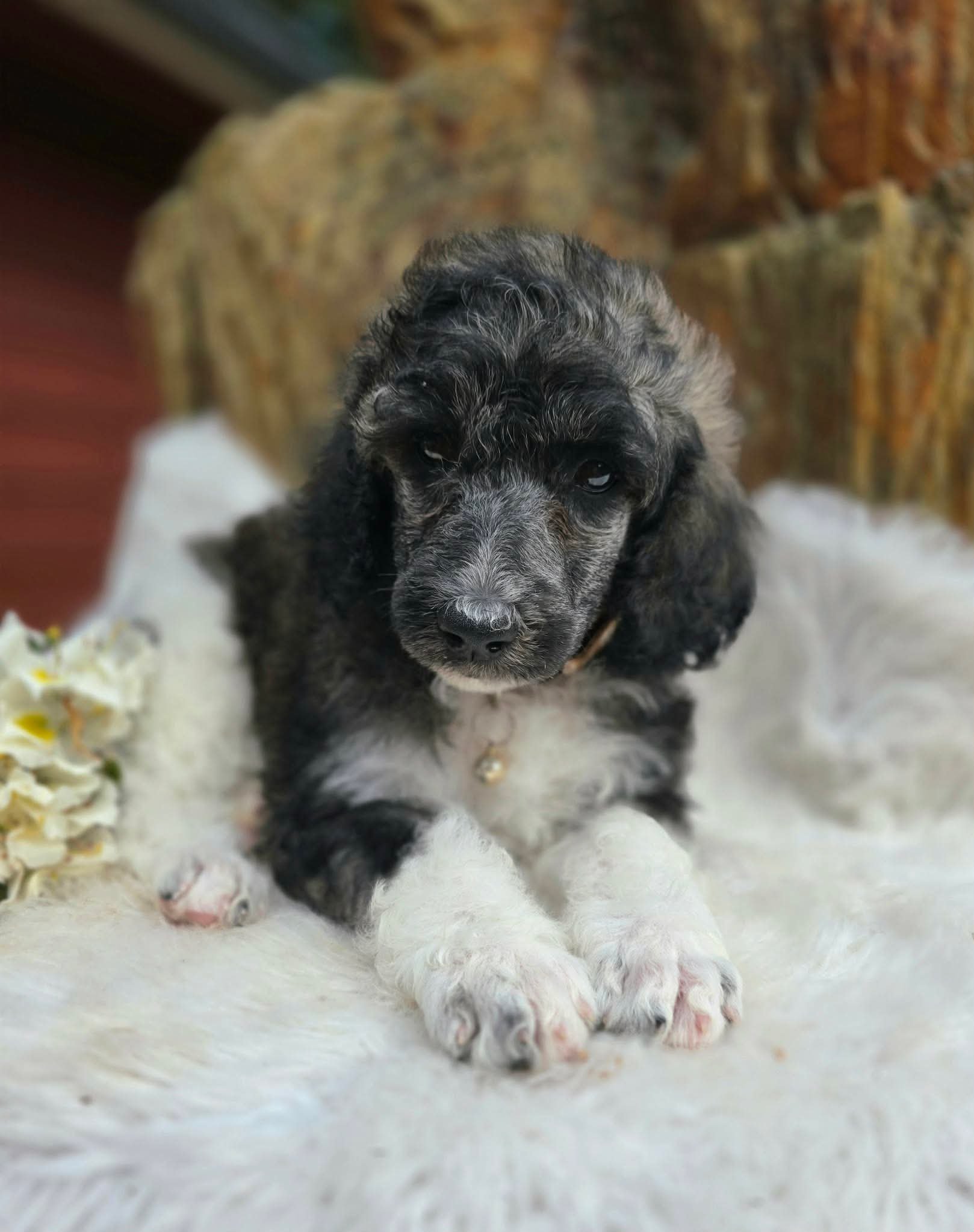
Snow White - Female
Most Likely to Love One Human With Her Entire Soul
Snow White’s temperament evaluation revealed an extraordinarily human-focused, emotionally connective puppy who wants nothing more than to be with her person and participate in life alongside them. From the very beginning of testing, Snow White showed intense relational orientation toward people, repeatedly choosing human interaction over environmental exploration or toy engagement. While she demonstrated curiosity about the environment, her primary focus remained social connection, reassurance, and staying emotionally anchored to her humans.
Snow White is the definition of a Velcro dog. Her future person will very likely become the absolute center of her universe. We joked during testing that “the sun will rise and set with you,” but honestly, that description fits her remarkably well. She is the kind of puppy who will follow you to the bathroom, follow you three steps to the printer, and immediately notice when you leave the room. She is highly emotionally invested in human connection and appears to regulate herself largely through proximity and interaction with her people.
One of the most important things to understand about Snow White is that her emotional intensity is not weakness, laziness, or lack of desire. In fact, she showed extremely high motivation throughout testing. Repeatedly, her body language communicated some version of:
“I want to so bad.”
She consistently tried, re-engaged, circled back, and attempted participation even when emotionally overwhelmed or uncertain. However, her confidence ceiling is currently lower than her motivation level. Snow White often appeared to want desperately to engage with challenges while simultaneously feeling unsure of her own ability to succeed independently. This is a puppy who will need empowerment, encouragement, and confidence-building — not coddling.
That distinction is critical for her future home. Snow White is likely to flourish with confident, emotionally stable handlers who nurture resilience and capability while helping her learn that she can handle the world safely. If overprotected or emotionally overmanaged, she could very easily become overly dependent, environmentally avoidant, or separation-anxiety prone. The separation anxiety risk here is very real if proper independence-building protocols are not intentionally implemented early.
Emotionally, Snow White is extremely tenderhearted. During moments of emotional chaos or heightened stress, she visibly absorbed the emotional atmosphere around her. However, rather than fleeing or shutting down completely, she stayed socially connected and emotionally engaged. She is deeply affected by emotional energy, conflict, and dysregulation in her environment. We repeatedly saw a puppy who wanted reassurance, wanted connection, and wanted help processing what she was feeling.
Environmentally, Snow White showed moderate confidence with lower independent environmental ownership than some of her littermates. She did not naturally walk into situations saying, “I got this.” Instead, she consistently sought reassurance, emotional anchoring, and guidance from her people. However, she also demonstrated good recovery and resilience overall. Once emotionally settled, she was capable of re-engaging, reconnecting, and continuing forward.
Snow White’s play and prey behaviors appeared emotionally integrated rather than highly predatory or environmentally driven. While she did show some intensity during play, her overall profile does not suggest a hard, environmentally intense dog. Her focus remained overwhelmingly social and relational throughout testing. She also showed a strong tendency to use her nose to process the environment and orient herself.
Overall, Snow White feels best suited for a home looking for an intensely bonded companion dog — the kind of dog who wants to be your emotional shadow and your constant little sidekick. She would likely thrive in a home capable of balancing emotional support with empowerment and structure. Snow White is not the puppy for someone wanting a highly independent dog who confidently takes on the world alone. She is the puppy who says:
“Please help me believe I can do this.”
And once she feels safe enough to believe it, she is going to give her whole heart in return.
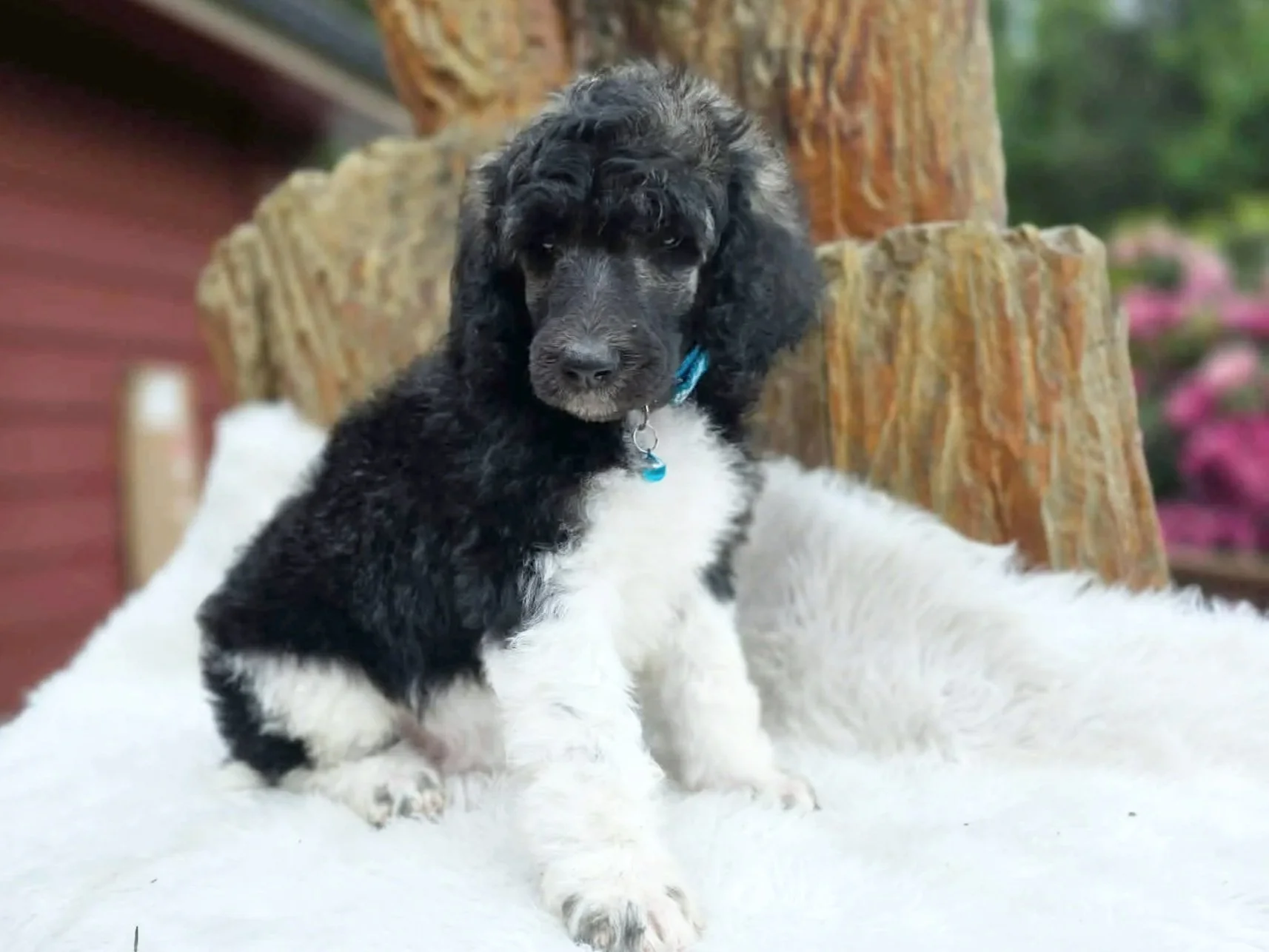
Tiana - Female
Most Likely to Become Everyone’s Emotional Support Sister
Tiana’s temperament evaluation revealed a deeply relational, emotionally perceptive puppy who approaches the world thoughtfully rather than forcefully. She entered the evaluation socially interested but softer in her presentation than some of her littermates, initially checking in with people before moving into environmental exploration. Tiana showed a strong tendency to process both social and environmental experiences carefully before fully committing, but once she settled in and felt emotionally safe, she became increasingly affectionate, playful, and engaged.
One of the most defining things about Tiana is how profoundly social she is with other dogs. Throughout the entire evaluation, she repeatedly returned to Sparkles for reassurance, social interaction, emotional processing, and comfort. When uncertain or mildly stressed, she did not flee or shut down — she went to go “tell Sparkles about it.” We joked about it repeatedly during testing, but honestly, it became one of the clearest windows into her temperament. Tiana is a puppy who processes the world socially and relationally, and she appears to draw tremendous confidence and emotional stability from canine companionship.
This is very much a “get your dog a dog” kind of puppy. We feel extremely strongly that Tiana would thrive in a home with another stable, confident, socially appropriate dog. Not in a “dogs are nice” kind of way — in a this fills an emotional need for her kind of way. A confident older dog who can show her the ropes, model confidence, provide companionship, and help her process the world would likely be enormously beneficial for her long-term happiness and confidence development. While she would still bond deeply with her humans, we do not think she is the kind of puppy who truly wants to be an only dog.
Tiana demonstrated excellent touch tolerance and handling compliance when approached respectfully. During restraint and handling exercises, she remained cooperative and tolerant, even when emotionally affected by the interaction. However, it is very important to understand the nuance here: Tiana is highly emotionally perceptive. She is the kind of puppy who feels things deeply. She tolerated handling beautifully, but she absolutely noticed social pressure and emotional tension. In a calm, respectful, emotionally stable household, this trait will likely make her exceptionally affectionate, connected, and emotionally intuitive. In a chaotic, overly physical, or disrespectful environment, she is likely to become emotionally overwhelmed much more quickly.
Environmentally, Tiana showed moderate confidence with good recovery skills. She was not a puppy who bulldozed into novelty saying, “I got this,” but she also was not fearful or avoidant. Instead, she approached the world thoughtfully, using social referencing and emotional processing as part of how she built confidence. Once warmed up, her body language loosened significantly, her playfulness increased, and she became much more expressive and socially interactive. Her confidence appears highly buildable with supportive handling, patient empowerment, and strong canine role models around her.
Tiana’s human focus is extremely strong, but unlike some puppies who become frantic or overly dependent, her attachment style feels softer and more balanced. She enjoys connection deeply, seeks out affection, and wants to participate in life with her people, but she also demonstrated an ability to self-regulate and process independently once emotionally settled. She is not a “life of the party” personality; she is more the puppy who quietly crawls into your lap, checks in with everyone emotionally, and wants harmony in her environment.
Overall, Tiana feels best suited for a thoughtful, emotionally intelligent home that values relationship-building, structure, patience, respectful interaction, and ideally another confident dog in the household. She would likely thrive as a deeply bonded companion, emotional support animal, therapy prospect with the right handling, or active family dog in a home that understands her sensitivity and does not mistake her softness for weakness. Tiana is the kind of dog who is going to bond very deeply with both her people and her canine companions, feel things very genuinely, and quietly become the emotional glue holding the household together.
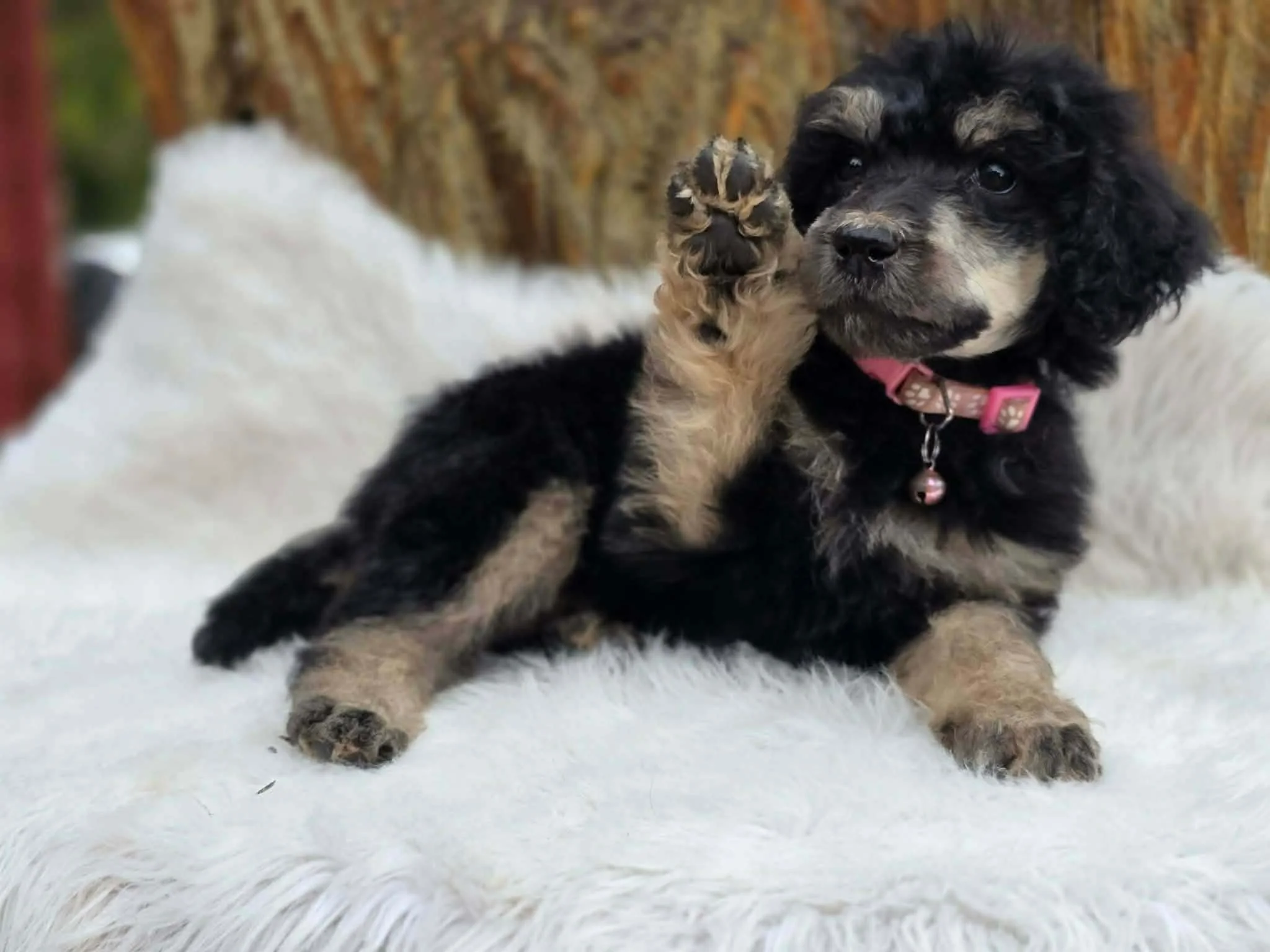
Aurora - Female
Most Likely to Narrate Every Emotional Experience in Real Time
Aurora’s temperament evaluation showed a puppy who is deeply relational, emotionally expressive, highly engaging, and absolutely full of personality. She entered the testing environment socially and enthusiastically, immediately seeking out interaction, affection, toys, and engagement with the people around her. Aurora is very much the kind of puppy who wants to emotionally experience life with her humans rather than simply exist nearby while things happen around her.
One of the most notable things about Aurora is that she processes the world very emotionally and very honestly. During testing, she occasionally displayed stress signals such as scratching, lip licking, vocalization, or increased arousal when frustrated or uncertain. However, what stood out most was that she continued functioning, engaging, and participating throughout those moments rather than shutting down, avoiding, or emotionally collapsing. Aurora has big feelings, not weak nerves. She notices pressure, frustration, and emotional energy, but she consistently worked through those feelings while remaining socially connected and interactive.
Aurora demonstrated strong environmental confidence overall. Novel sounds, unusual surfaces, movement, bubble wrap, wobble boards, and other environmental challenges produced very little lasting concern. While she occasionally paused to process or express feelings about a situation, her recovery remained good and she consistently returned to interaction, exploration, and play. Aurora appears to have both a genuine “on switch” and a genuine “off switch.” She is capable of becoming highly animated, enthusiastic, and emotionally invested during activity while still appearing capable of deeply settling and melting into her people when emotionally secure and comfortable.
Human interaction is extremely important to Aurora. She appears highly emotionally invested in her people and strongly responsive to engagement and relationship-building. At the same time, she also demonstrated the ability to self-entertain appropriately during portions of testing, which is an important distinction. Aurora does not currently strike us as inherently separation-anxiety prone, but because of her strong human focus and emotional investment, her future family should be intentional about building confidence, independence, and self-soothing skills from an early age.
Aurora also showed strong prey and toy drive throughout testing. She enjoyed tugging, carrying toys, interactive play, and chasing games, and her intensity increased noticeably as she became more comfortable and excited. She demonstrated excellent persistence and continued working through frustration during problem-solving exercises, even when solutions were not immediately obvious. Aurora is the kind of puppy who could very easily become a lot of dog if her emotional arousal and excitement are constantly amplified without structure or regulation. Like many highly interactive and emotionally expressive puppies, she will benefit greatly from families who encourage calmness, emotional regulation, and thoughtful engagement rather than constantly escalating excitement and rewarding emotional chaos.
Overall, Aurora presents as an emotionally intelligent, highly interactive, environmentally stable puppy with strong human connection, excellent persistence, and a very engaging personality. We feel she would thrive in an active companion home, emotionally connected family, enrichment-focused sporting home, or with individuals who enjoy a deeply interactive relationship with their dog. Aurora feels like the kind of dog who is going to make her people feel very loved, very needed, and very involved in whatever emotional journey she has decided everybody is taking together that day.
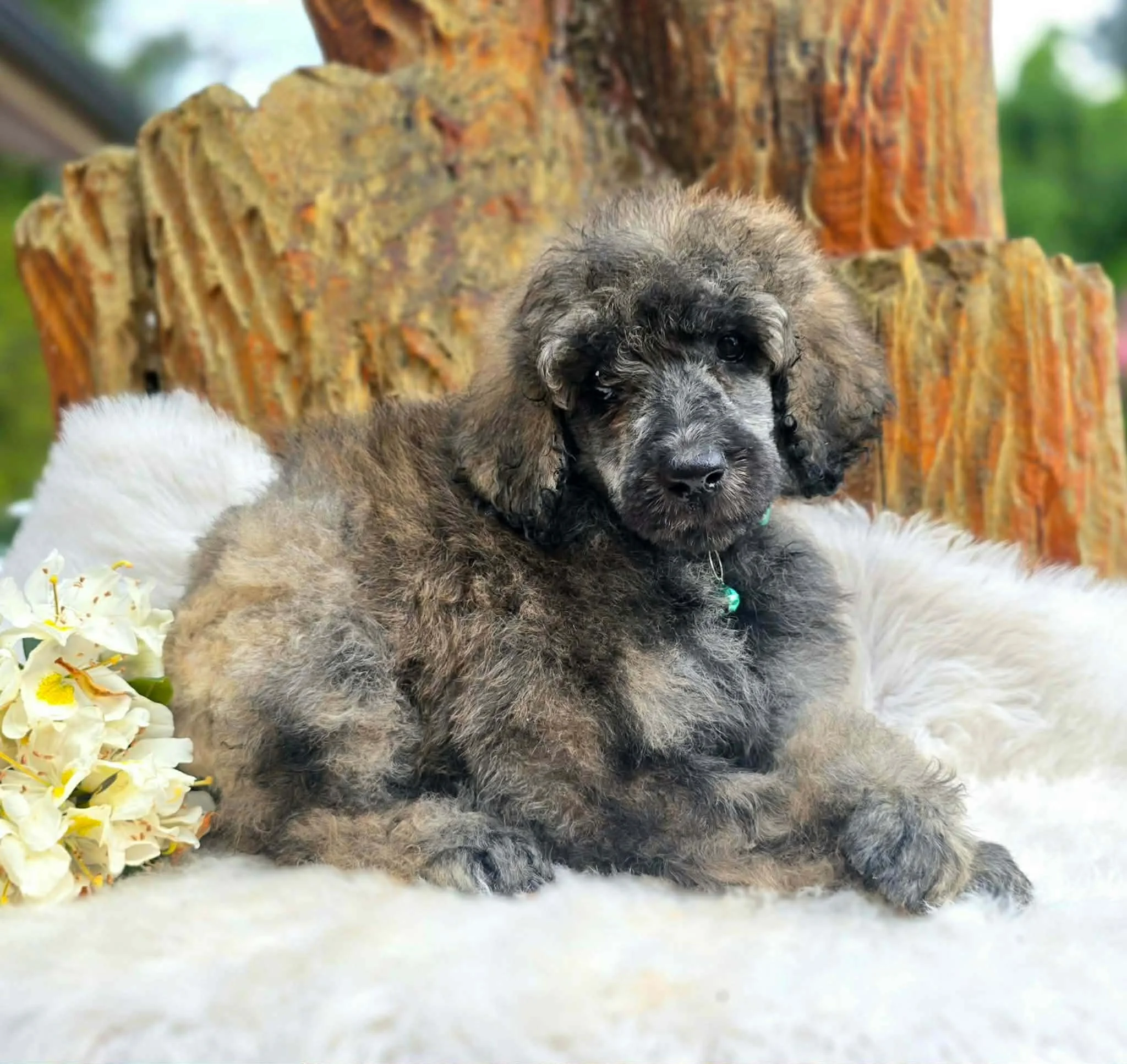
Ariel - Female
Most Likely to Ask “What’s In It For Me?” and Still Charm Everyone Anyway
Ariel’s temperament evaluation showed a puppy who is socially thoughtful, emotionally aware, and quietly confident beneath a very affectionate and engaging exterior. She entered the testing environment quickly and happily, immediately engaging with people, toys, and interaction while maintaining a noticeable sense of social awareness and self-control. Ariel consistently demonstrated what we often describe as “polite intensity” — she is playful, engaging, enthusiastic, and full of personality, but still appears to carry an invisible shield that keeps her from becoming rude, reckless, or overwhelming.
Ariel showed strong environmental confidence throughout testing. Novel objects, unusual surfaces, movement, sound, bubble wrap, wobble boards, ramps, and the umbrella test produced little lasting concern. While she occasionally paused to process or offered small stress signals such as tongue flicks or scratching, she consistently recovered quickly and continued interacting, exploring, and participating. Ariel clearly notices pressure, social dynamics, and handling style, but she continued functioning confidently throughout testing rather than shutting down or avoiding interaction.
Human interaction is clearly very important to Ariel. She showed strong human focus, frequent check-ins, affectionate behavior, and a naturally socially responsive personality. At the same time, she also demonstrated the ability to self-entertain and explore independently, which we feel is an important distinction. Ariel is not emotionally frantic or desperately dependent on human attention, but she is absolutely the kind of puppy who notices emotional energy and wants to participate in interaction and engagement with her people.
Ariel also showed strong prey and toy drive throughout testing. She enjoyed tugging, chasing, carrying toys, and interactive play, and her intensity increased as she became more comfortable and excited. However, unlike puppies who simply bulldoze through interaction, Ariel often approached training and engagement with a very clear:
“What’s in it for me?”
This was not defiance or avoidance, but rather a thoughtful, relational style of interaction. In several moments, once pressure or prompting stopped, she voluntarily chose to re-engage and participate on her own. Ariel feels very much like the kind of dog who wants to work with people, not simply for people.
During handling exercises, Ariel clearly communicated that she did not appreciate prolonged or disrespectful restraint. She showed appeasement gestures, tongue flicks, and attempts to politely disengage, but she remained forgiving, affiliative, and socially connected throughout. Ariel is not a puppy who simply shuts down and tolerates things she dislikes. She has opinions. She notices things. She communicates those feelings appropriately, and then she moves on. We do feel she will thrive best with respectful, emotionally intelligent handling and relationship-based training rather than excessive pressure or heavy-handed correction.
Overall, Ariel presents as an affectionate, emotionally intelligent, environmentally stable puppy with strong human connection, excellent social awareness, and a playful, engaging personality. We feel she would thrive in an active companion home, recreational or relationship-based sporting home, therapy-style environment with polite handling, or with families who value emotional connection and interactive partnership with their dog. Ariel feels like the type of dog who notices how everybody around her is feeling and wants to be part of the conversation.
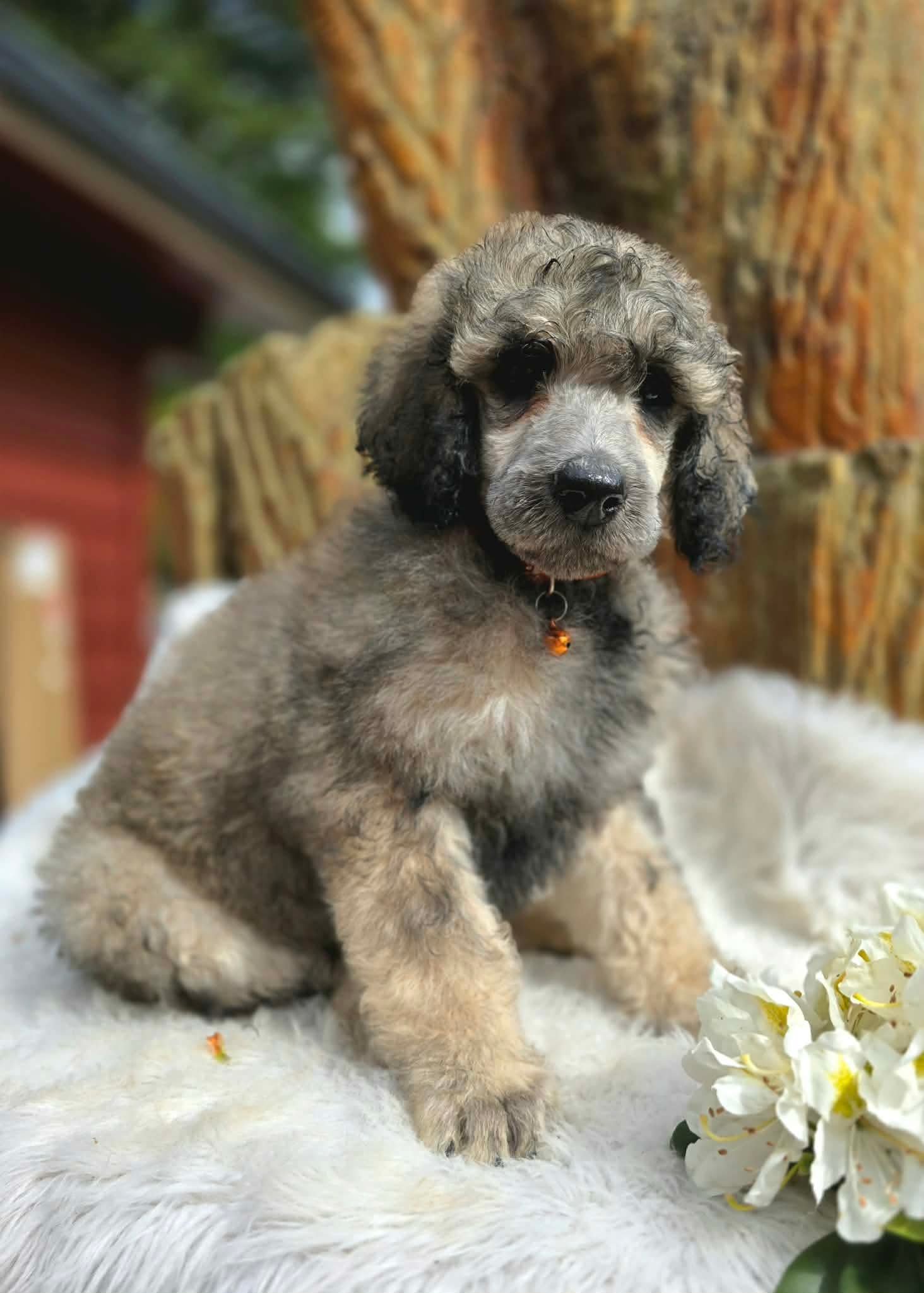
Florian - Male
Most Likely to Turn Every Stranger Into His New Best Friend
Florian’s temperament evaluation showed a puppy who is socially confident, environmentally resilient, and highly people-oriented without being clingy or frantic. He entered the testing environment with a brief moment of thoughtful observation, but very quickly settled in and started engaging enthusiastically with both people and the environment around him. Once comfortable, he showed a playful, animated personality full of zoomies, play bows, toy interaction, and happy social engagement. Florian is very much the kind of puppy who wants to be part of whatever is happening and wants to participate in life with his people.
One of Florian’s strongest qualities is his recovery and resilience. Novel surfaces, strange sounds, sudden movement, bubble wrap, umbrella pops, and other environmental surprises were processed quickly and confidently. He demonstrated a very curiosity-driven coping style — rather than avoiding things that startled or confused him, he investigated them. Even when surprised, his recovery was immediate and he returned right back to playing, exploring, or interacting. Florian consistently gave us the impression of a puppy with excellent emotional elasticity and a very optimistic outlook on the world.
Florian also showed a very forgiving temperament. During handling exercises, he clearly communicated when he was finished or uncomfortable with prolonged restraint, but he did so appropriately and without conflict. Importantly, he recovered immediately afterward, returning right back to social engagement and affection. Florian is quick to forgive, which is a wonderful trait, but it is also something families need to be mindful of. Quick recovery does not mean he loves everything being done to him. He notices social pressure and handling, but he does not hold onto conflict or stress.
His energy level falls into a very manageable middle ground. Florian is playful, active, enthusiastic, and very socially rewarding, but not chaotic or overwhelming. He has enough energy and motivation to enjoy sports, adventures, training, and active family life while still appearing capable of settling and functioning thoughtfully. He showed strong human focus, excellent engagement, and very good responsiveness throughout testing, all while maintaining enough independence to explore and self-entertain appropriately.
One of the biggest things to understand about Florian is that he is an extremely socially rewarding puppy. He is fun, engaging, confident, interactive, and very easy to hype up. Because of that: do not reward the crazy. If every overexcited, pushy, or over-the-top behavior is constantly reinforced because it is funny, entertaining, or cute, Florian absolutely has the potential to become much “more dog” than some homes are prepared for. However, if his future family focuses on rewarding calm engagement, emotional regulation, thoughtful interaction, and appropriate outlets for his energy and enthusiasm, we expect him to mature into a very balanced and highly versatile adult dog.
Overall, Florian presents as a highly versatile puppy with excellent confidence, strong resilience, high social engagement, and a very optimistic outlook on the world. We feel he would thrive in an active companion, sporting, therapy, or potentially service-oriented home with thoughtful structure and continued focus on calm regulation, independence-building, and cooperative handling. Florian is the kind of puppy who is going to make people laugh, make people engage with him, and make people want to interact with him — which is exactly why his future family needs to remember not to accidentally create a tiny adorable chaos goblin.
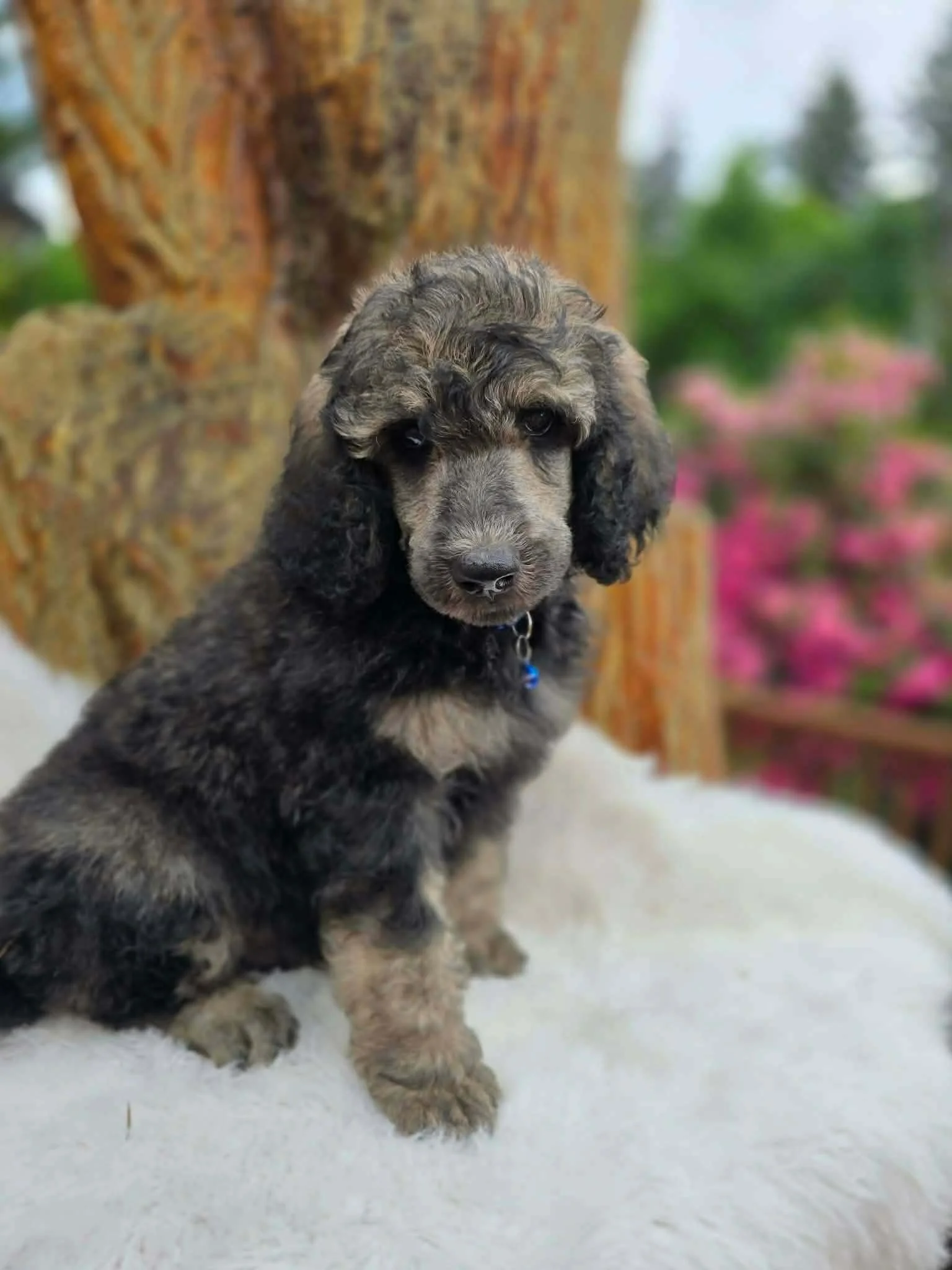
Charming - Male
Most Likely to Be Glued to Your Side Through Every Adventure
Charming’s temperament evaluation revealed a deeply relational, emotionally cooperative puppy who wants very badly to participate in life with his people. From the moment he entered the evaluation, Charming showed strong human orientation, repeatedly seeking closeness, physical contact, reassurance, and social engagement. He was affectionate without being overwhelming, soft without being fragile, and consistently demonstrated a strong desire to remain emotionally connected throughout testing.
One of the clearest themes throughout Charming’s evaluation was:
“I’ll do it if we do it together.”
Charming repeatedly demonstrated willingness, motivation, and engagement when he felt supported and emotionally anchored by his handler. However, it became increasingly clear throughout testing that his confidence is heavily relationship-dependent. He does not naturally walk into a new environment saying, “I got this.” Instead, he appears to borrow confidence from the people he trusts. Once emotionally supported and encouraged, he became far more willing to investigate, participate, and engage with challenges.
It is very important to understand the distinction between motivation and independent confidence with Charming. He is an extremely motivated puppy socially. He wants connection, inclusion, interaction, and approval. However, his willingness to participate should not be mistaken for strong independent environmental confidence. During testing, he often required reassurance, coaxing, or emotional support before attempting new tasks or challenges. This does not make him weak — it makes him highly relational in how he approaches the world.
Charming showed consistently loose, affiliative body language throughout testing, even during moments of stress or discomfort. During handling exercises, he clearly communicated:
“Please don’t.”
However, he did so politely, without escalation, and remained emotionally connected throughout. Once handling was adjusted respectfully, he softened again very quickly. Charming is not a puppy who blindly tolerates disrespectful handling without emotional impact, but he is highly cooperative when treated thoughtfully and fairly. He appears very emotionally honest in his communication while still remaining deeply forgiving and socially engaged.
Human connection is extraordinarily important to Charming. He showed extremely high human focus throughout testing and repeatedly demonstrated strong attachment tendencies. While he was capable of brief moments of self-entertainment once emotionally settled, his overall pattern strongly suggests that he is at risk for becoming overly dependent on human presence if independence-building is not intentionally prioritized early. Charming absolutely has Velcro dog tendencies. He is the kind of puppy who wants to follow you from room to room simply because being near you feels emotionally important to him.
Environmentally, Charming demonstrated moderate confidence with good resilience overall. He startled mildly at certain moments, needed brief pauses to process unfamiliar experiences, and benefited significantly from encouragement and support. However, once emotionally reassured, he consistently re-engaged and continued participating. His recovery skills were good, and his body language generally remained soft and loose rather than escalating into panic or shutdown.
Unlike some of the higher-drive puppies in the litter, Charming’s motivation appears primarily relational rather than environmentally or prey driven. Toys, novelty, and environmental exploration mattered far less to him than shared interaction and emotional participation with his people.
Overall, Charming feels best suited for a home that values relationship, emotional connection, thoughtful encouragement, and cooperative partnership. He would likely thrive as a deeply bonded companion, emotional support prospect, or active family dog in a home that prioritizes confidence-building and independence skills alongside affection and connection. Charming is the kind of dog who is going to look at his person and say:
“I still want to be everything with you.”
Even when he feels uncertain.
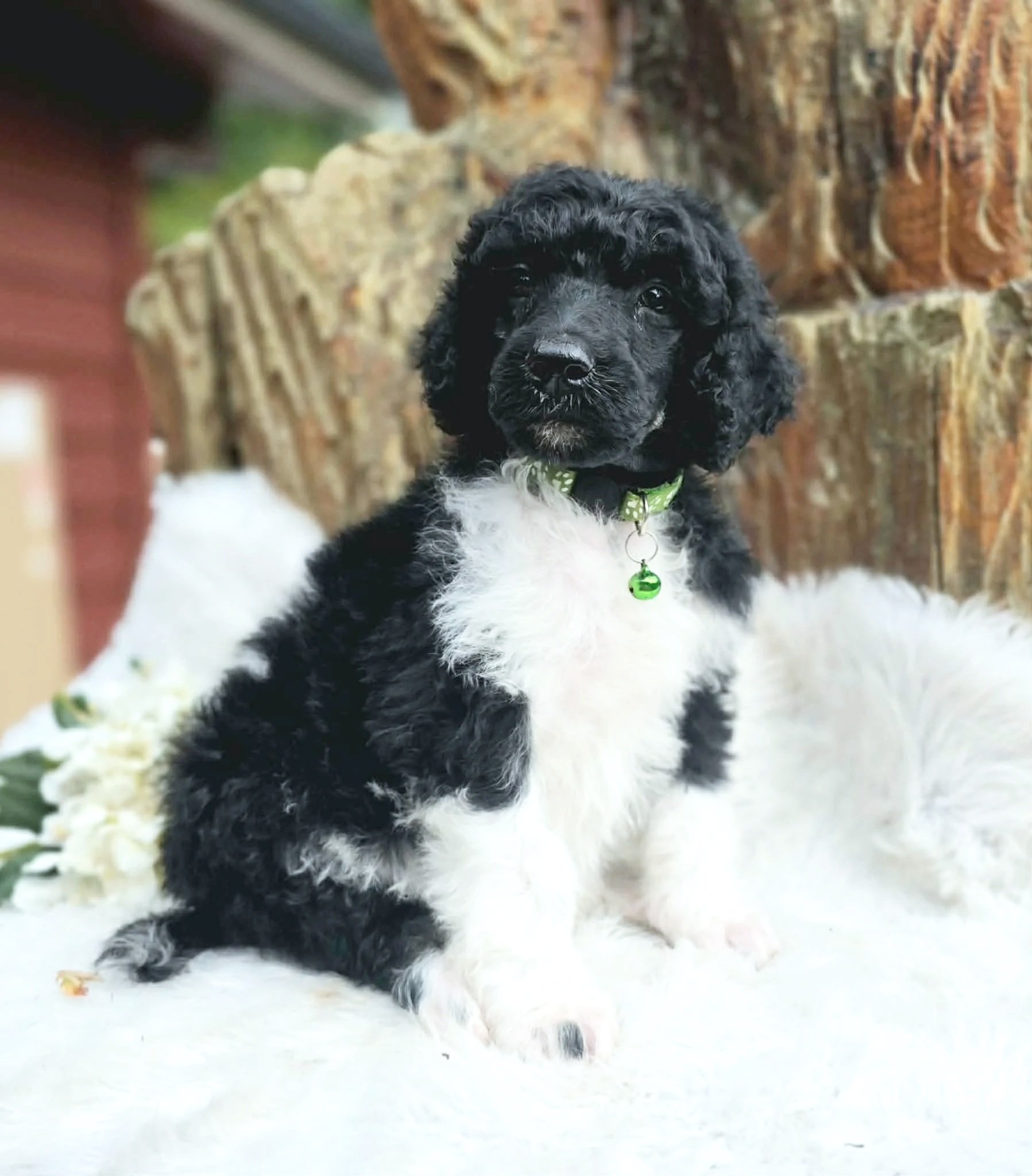
Naveen - Male
Most Likely to Quietly Crawl Into Your Lap and Stay There Forever
Naveen’s temperament evaluation revealed a gentle, deeply affiliative puppy who approaches the world through connection, reassurance, and emotional closeness. From the very beginning of testing, Naveen showed strong human orientation, repeatedly seeking physical contact, affection, and social engagement rather than independently exploring the environment around him. He consistently appeared most comfortable when emotionally anchored to his people and showed a clear preference for connection over environmental ownership.
One of the strongest themes throughout Naveen’s evaluation was:
“Please help me feel safe.”
Unlike puppies who naturally walk into new situations with bold independence, Naveen repeatedly looked to people for reassurance, guidance, and emotional support before fully engaging. He often appeared uncertain about challenges or environmental novelty, but importantly, he did not shut down or refuse interaction. Instead, he stayed socially connected, continued trying, and repeatedly sought closeness and encouragement from his people.
Naveen showed extremely affectionate and emotionally connective social behavior throughout testing. He repeatedly nudged for affection, tucked himself physically into people, sought body contact, and displayed very soft affiliative gestures. Several times during testing, he actively sought comfort and reassurance through closeness rather than disengaging or withdrawing. Even his uncertainty felt relational rather than avoidant — he did not want to leave the interaction; he wanted help navigating it.
One important distinction with Naveen is that his confidence level appears lower than his resilience level. He does not currently possess strong independent environmental confidence or the kind of “I got this” attitude seen in some of his littermates. However, once emotionally settled, he demonstrated significantly more ability to self-regulate and self-entertain than initially expected. During later portions of testing, he independently played with toys, explored quietly, and relaxed without constantly searching for his people. That distinction matters. Naveen appears reassurance-seeking, but not necessarily emotionally incapable of independence when given the opportunity to settle and process.
Handling and restraint exercises revealed a puppy who was emotionally soft but generally cooperative. He communicated discomfort subtly and politely, preferring connection and reassurance over conflict or resistance. He appears highly sensitive to tone, emotional atmosphere, and relational dynamics while remaining socially engaged throughout stress and recovery periods.
Environmentally, Naveen showed lower confidence but fairly good resilience overall. Novel situations and challenges frequently produced hesitation, uncertainty, or requests for reassurance. However, he consistently recovered, re-engaged, and continued participating rather than shutting down entirely. His body language generally remained soft and affiliative even during moments of stress.
Naveen’s motivation appears highly relational rather than environmentally or prey driven. His strongest reward throughout testing was emotional connection and shared interaction with people. He did not demonstrate particularly intense toy drive, prey behaviors, or independent environmental ambition. Instead, his motivation repeatedly centered around:
closeness,
reassurance,
participation,
and emotional safety.
Overall, Naveen feels best suited for a calm, emotionally intelligent home that values relationship-building, patience, confidence development, and gentle encouragement. He would likely thrive as a deeply bonded companion dog or emotional support prospect with people willing to nurture resilience and independence without overwhelming him emotionally. Naveen is not the puppy who naturally believes he can conquer the world alone. He is the puppy who quietly asks:
“Can we do this together?”
And once he feels emotionally safe, he tries very hard to meet you there.
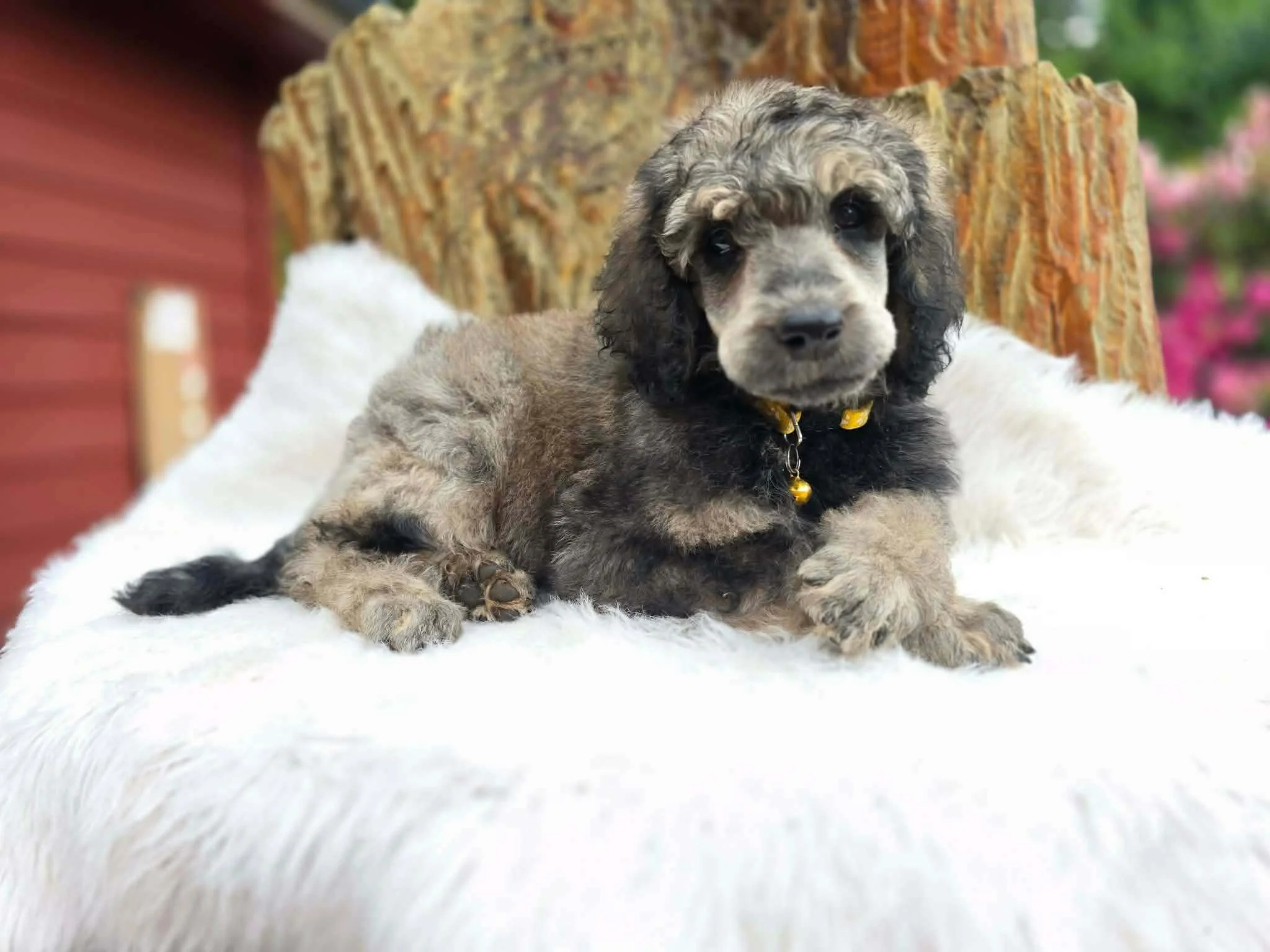
Belle — Female
Most Likely to ask, “Did I Do It Right?”
Belle is a deeply relational, emotionally thoughtful puppy whose entire world revolves around connection, praise, and understanding what her people want from her.
During her temperament evaluation, Belle showed herself to be incredibly people-oriented and highly responsive to emotional feedback. More than treats, toys, or excitement, Belle wanted reassurance. She wanted to hear that she was a good girl. And once she understood the “game,” her confidence visibly grew in real time.
One of the most fascinating things about Belle was watching her transformation throughout the evaluation itself. She began the test uncertain, cautious, and sensitive to pressure. But with encouragement, praise, patience, and successful repetition, she blossomed. By the end of the session, we were watching a completely different puppy — one who was actively volunteering engagement, asking to participate again, and proudly showing off what she had learned.
Belle is an extremely praise-driven dog. This is not the kind of puppy who works because she wants a cookie. This is the kind of puppy who works because she wants you to smile at her and tell her she did well.
She is also a very emotionally sensitive puppy. Belle notices emotional tension, pressure, discomfort, and changes in handling style very quickly. She does not appear to carry emotional stress neutrally, which means she is best suited for emotionally stable, predictable homes with thoughtful communication and clear expectations.
Importantly, Belle is not fragile. She showed excellent recovery throughout testing and repeatedly chose to re-engage even after difficult or stressful moments. However, she is absolutely the kind of dog whose confidence can either flourish or diminish depending on how she is handled. Harshness, flooding, or inconsistent expectations would likely weigh heavily on her emotionally.
Belle feels especially well suited for calm companion homes, emotionally intelligent families, respectful older children, or individuals looking for a deeply connected and relationship-oriented dog. She would likely thrive with people who enjoy positive reinforcement, partnership, encouragement, and collaborative training.
She is the kind of puppy who wants to sit close, look into your soul, and ask:
“Was that right? Did I make you happy?” .
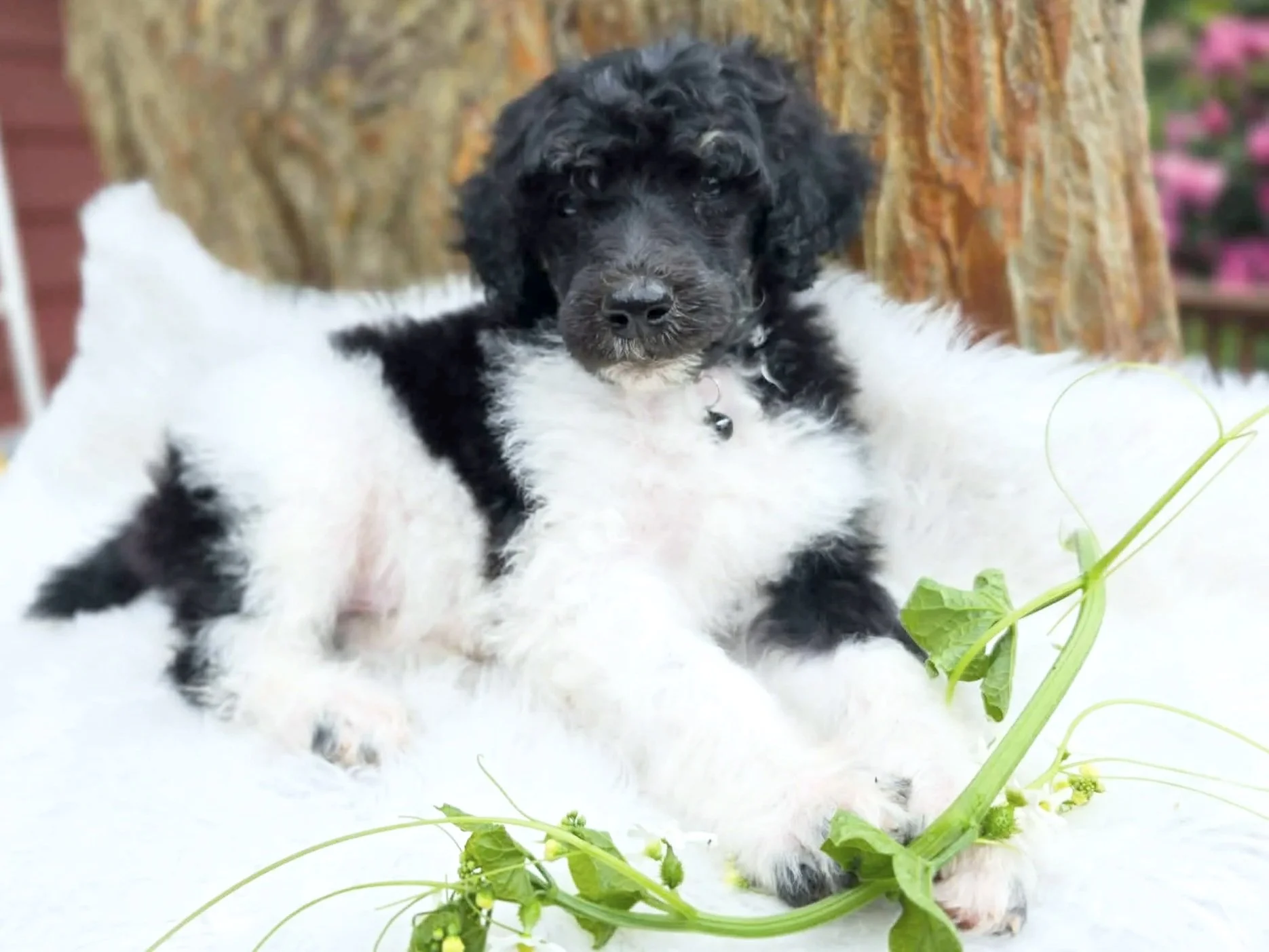
Eric - Male
Most Likely to Surprise Everyone
Eric was honestly one of the biggest surprises of the evaluations.
Within the litter environment, he had never particularly stood out as extraordinary. He blended into the group more quietly, and we did not expect him to come into individual testing and perform with the level of confidence, resilience, environmental stability, and workability that he ultimately showed us.
And then suddenly we found ourselves repeatedly looking at each other saying some version of:
“Oh… you’re actually really good.”
Very quickly, another realization started surfacing too:
This puppy is Magic Jr.
Not just because of the face, although the resemblance is absolutely there. It was the way he interacted with people, the way he wanted to hold hands, the way he immediately chose engagement over independence, and the way he threw himself enthusiastically into every interaction that made the comparison impossible to ignore.
Once isolated and evaluated independently, Eric consistently demonstrated strong recovery, excellent resiliency, high human engagement, environmental confidence, and a remarkable ability to bounce back and continue participating even when highly excited or corrected.
One of the most important things we learned about Eric during testing is this:
Eric is not emotionally fragile — he is simply highly excitable.
Those are two very different things.
He gets excited quickly, aroused quickly, and engaged quickly, but unlike some of the softer, more emotionally absorbent puppies, he does not appear to carry stress or emotional pressure with him afterward. He experiences it, processes it, and moves on.
Throughout testing, Eric repeatedly chose people over toys, interaction over independence, and engagement over avoidance. He wanted to hold hands, give kisses, participate in everything, and immediately jump back into interaction any time engagement paused. He is deeply social, highly people-oriented, and incredibly fun to interact with.
At the same time, Eric is also a puppy who will absolutely require structure, boundaries, and emotional regulation from the very beginning.
He is easy to arouse and easy to hype up. During moments of excitement, he showed tendencies toward rough play, over-arousal, mounting, and pushy play behavior. Importantly though, those behaviors appeared excitement-based rather than emotionally unstable or conflict-driven. Eric is very shapeable, and the behaviors that are reinforced early are likely the behaviors that grow.
In other words:
Do not reward the crazy.
With calm structure, thoughtful boundaries, and appropriate outlets for engagement and play, Eric has the potential to mature into an exceptionally versatile, resilient, and rewarding dog.
He feels best suited for active, engaged homes with people who enjoy interaction, training, participation, and relationship-building. He would likely thrive in active companion homes, sports-style homes, or potentially working-oriented homes with experienced handlers who understand how to channel enthusiasm into appropriate behavior.
Eric is the kind of dog who makes you laugh, throws himself enthusiastically into life, and somehow sneaks up on you by being far more impressive than anyone expected.
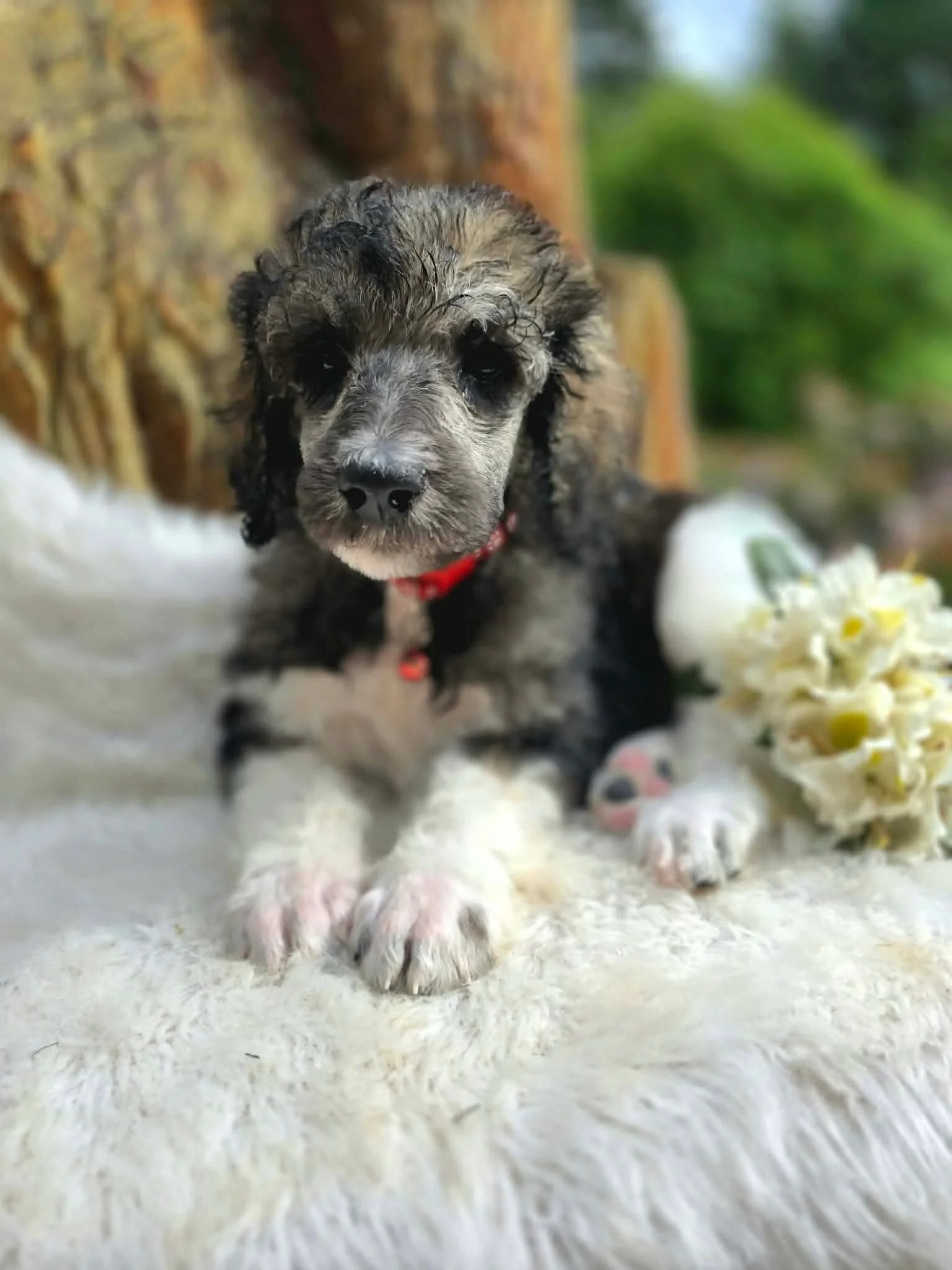
Aladdin — Male
Most Likely to Be Quietly Watching Everything
Aladdin is one of the more thoughtful, observant, and emotionally interesting puppies in the litter.
At first glance, he can come across softer, quieter, and slower to engage than some of his siblings. In the litter environment, he did not initially stand out as the bold, flashy puppy throwing himself into every interaction. But once separated and evaluated independently, a much more nuanced picture started to emerge.
Aladdin is a thinker.
Throughout his evaluation, there was a repeated feeling of:
“Can you help me understand what you want?”
He consistently approached new situations thoughtfully rather than impulsively. When uncertain, he did not bulldoze ahead, nor did he completely shut down. Instead, he paused, processed, observed, and tried to solve the problem in front of him.
One of the clearest patterns throughout his testing was that Aladdin’s confidence improves dramatically with familiarity and understanding. Once he understood the “game,” he became increasingly willing to retry obstacles, engage with challenges, and participate socially.
He is also a puppy with very strong social awareness and a noticeable amount of FOMO. He wants to be included. He wants to know what is happening. He wants access to the activity and interaction around him, even if he is not always the loudest participant in the room.
Aladdin showed excellent touch tolerance throughout testing. While he may not have fully enjoyed every aspect of handling, he remained cooperative, thoughtful, and forgiving. He appeared much more likely to process discomfort internally than escalate outwardly.
One of the more surprising things about Aladdin was that despite initially appearing softer and potentially highly emotionally absorbent, he actually demonstrated significantly more emotional stability than expected. He noticed stress and social changes around him, but he did not appear deeply burdened by them in the same way some of the more tenderhearted puppies did.
This is important because it gives Aladdin a very interesting balance:
thoughtful without being fragile,
sensitive without being overwhelmed,
relational without being frantic,
lower energy without lacking engagement.
He is not the kind of puppy who naturally lives in a state of constant arousal or chaos. Instead, he appears more emotionally measured, observant, and cognitively engaged.
Aladdin feels particularly well suited for thoughtful companion homes, emotionally intelligent adults, respectful families, therapy-style environments, and potentially psych-oriented service work with continued confidence development. He is likely the kind of dog who bonds deeply, watches carefully, and quietly learns everything about his people.
He is not necessarily the loudest puppy in the room.
He is the puppy sitting nearby, carefully watching everything, slowly figuring everyone out, and then eventually deciding you are his whole world.
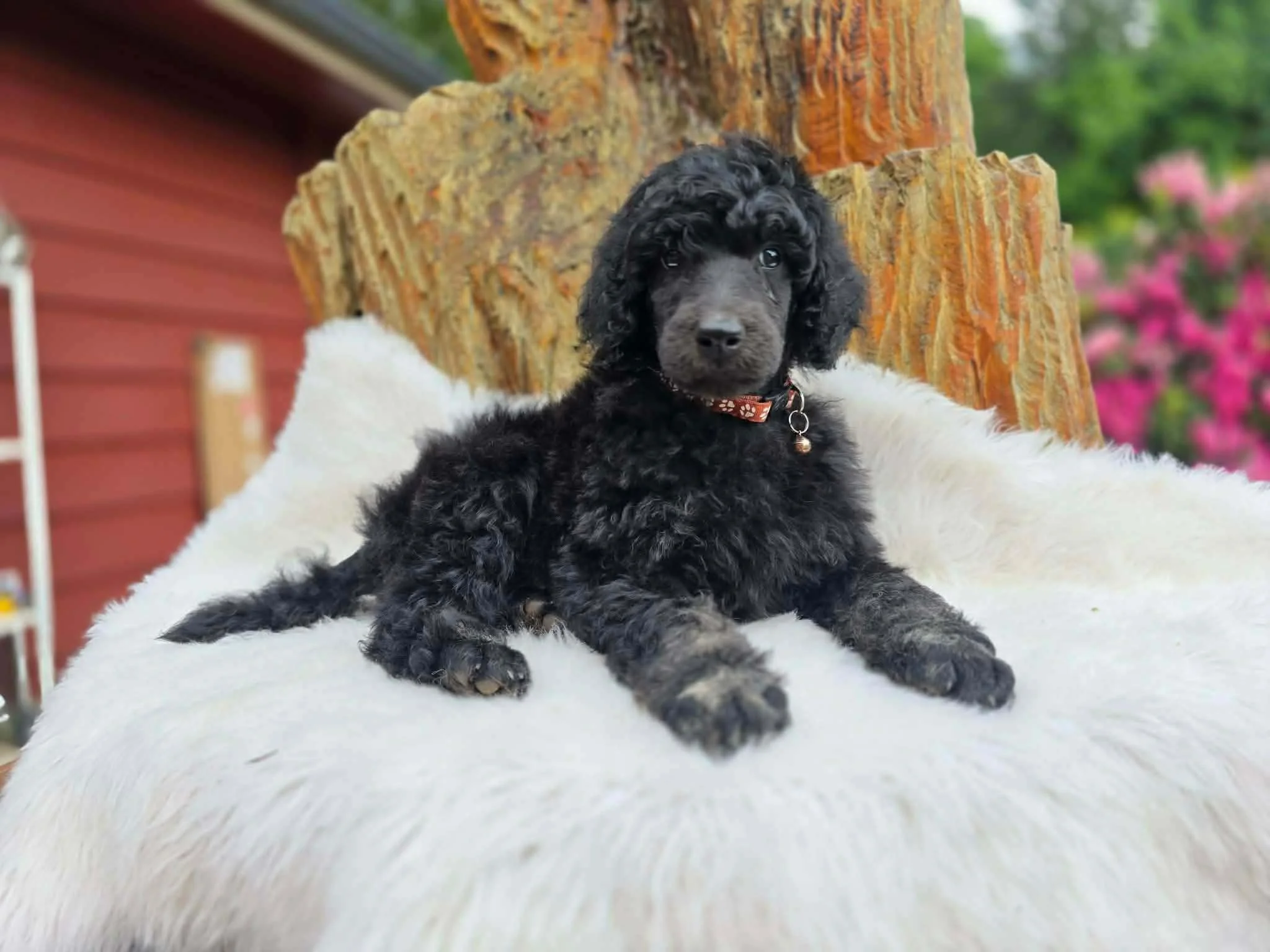
Flynn - Male
Most Likely to Be Quietly Judging Your Decisions
Flynn is one of the most thoughtful, observant, and analytical puppies in the litter.
Very early in his evaluation, one word kept coming up over and over again:
Detective.
Flynn does not rush headfirst into situations simply because they exist. He watches. He processes. He thinks things through. He wants to understand what is happening before fully committing himself emotionally or physically.
That does not make him weak.
In fact, one of the most important things about Flynn is that he consistently kept trying even when uncertain. He was willing to engage, willing to participate, and willing to work through challenges — but he wanted time to process them first.
There was a repeated feeling throughout his evaluation of:
“I want to understand this before I decide how I feel about it.”
Flynn appears to bond deeply and thoughtfully rather than quickly and indiscriminately. He is socially affectionate and emotionally connected, but not in the frantic, all-consuming way some puppies can be. Instead, he feels more selective, observant, and relationship-aware.
One of the clearest themes throughout his testing was that consistency matters enormously to him.
When humans were predictable, supportive, and emotionally clear, Flynn engaged beautifully. When interactions became inconsistent or trust felt disrupted, he noticeably paused and reassessed the situation. Rather than emotionally exploding, he appeared to quietly process:
“I’m not sure you’re trustworthy right now.”
That emotional thoughtfulness is a huge part of who he is.
Flynn is also a puppy who will require intentional independence-building from the very beginning. He showed clear human-dependent tendencies and a strong desire for social inclusion and access to his people. He is likely to struggle if suddenly expected to self-soothe or be emotionally independent without carefully building those skills over time.
Importantly though, Flynn is not emotionally chaotic. He is not dramatic. He is not explosive.
He is thoughtful.
He wants consistency.
He wants predictability.
He wants to understand the rules of the relationship and the environment around him.
Environmentally, Flynn showed lower overall intensity and lower prey drive than many of his siblings. He was much more interested in observing, processing, and participating thoughtfully than throwing himself wildly into excitement or chaos. He consistently appeared more interested in figuring things out than simply reacting to them.
Flynn feels best suited for emotionally consistent homes with thoughtful handlers who appreciate a quieter, more observant, deeply relational dog. He would likely thrive with adults or respectful older children who value connection, routine, predictability, and relationship-building.
He is the kind of dog who may not immediately throw himself at every person in the room.
But once he decides you are safe, important, and worth trusting, he is going to watch every move you make and quietly make you the center of his world.
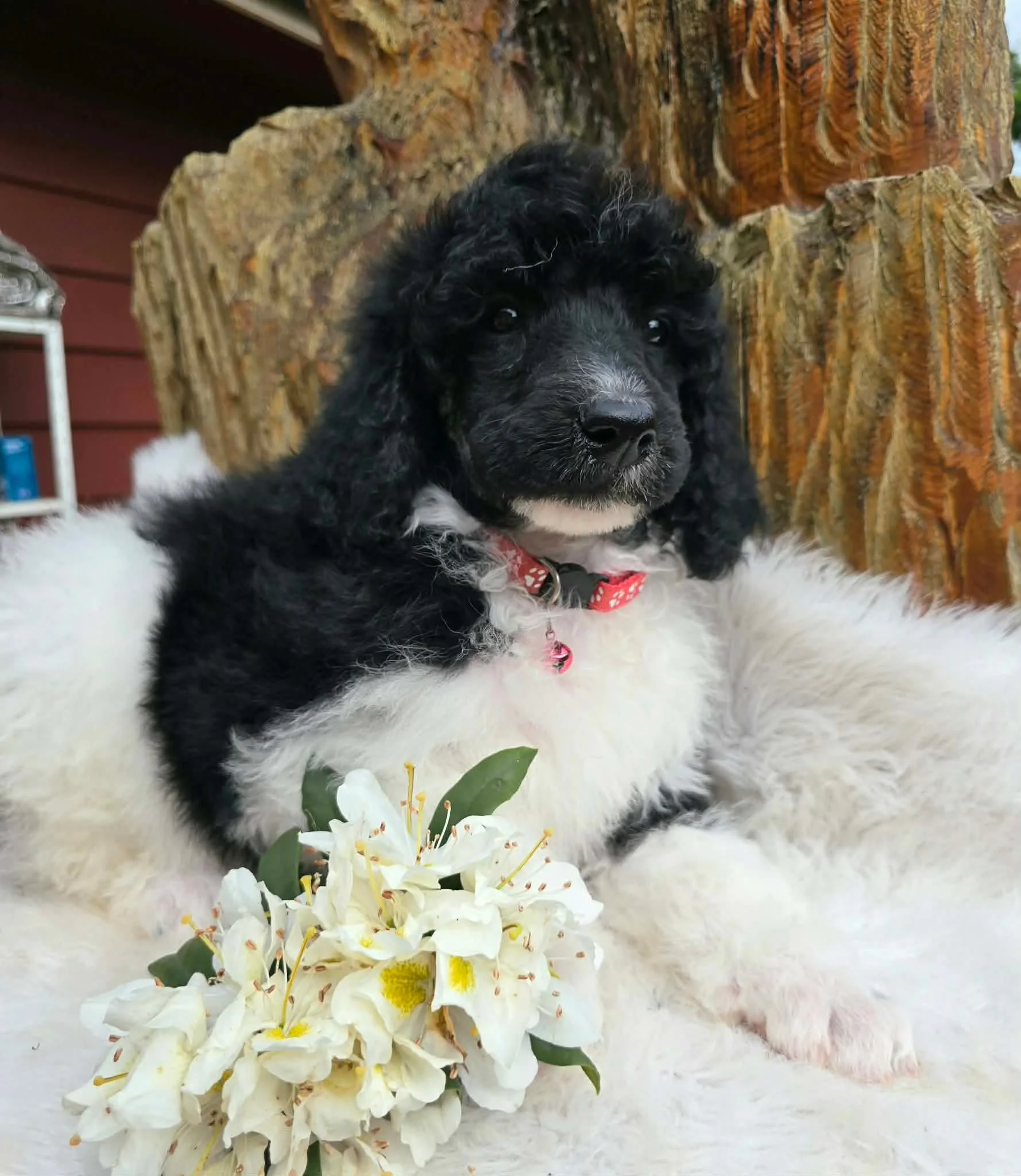
Rapunzel - Female
Most Likely to Bloom with Encouragement
Rapunzel is one of the most emotionally interesting puppies in the litter because she consistently showed us a very specific pattern throughout her evaluation:
The first introduction is hard.
The second introduction is dramatically better.
Over and over again, Rapunzel approached new situations with uncertainty, emotional conflict, and visible stress signals — and then, once she understood the situation and realized it was safe, she became increasingly willing, engaged, and participatory.
Very quickly, we found ourselves joking:
“She needs two introductions.”
That single phrase honestly summarizes a huge portion of her temperament.
Rapunzel is not a puppy who bulldozes confidently into novelty saying, “I got this.” She is thoughtful, emotionally aware, and highly sensitive to pressure and environmental change. New things clearly matter to her. She notices them. She feels them. She processes them.
But importantly, she still tries.
That distinction matters.
Throughout testing, Rapunzel repeatedly demonstrated a willingness to participate despite discomfort. She worked through wobble boards, novel surfaces, and environmental challenges while visibly uncertain, emotionally conflicted, and clearly wishing the whole process was maybe just a little less stressful.
And yet she continued engaging.
One of the strongest themes throughout her evaluation was:
“If I can do it with you, I can probably do it.”
Rapunzel appears highly relationship-oriented and very responsive to supportive partnership. She frequently looked for guidance, reassurance, and help when uncertain rather than simply shutting down or refusing outright. She wants connection and support while she processes the world around her.
She also showed lower touch tolerance than many of her siblings, though importantly not in an aggressive or confrontational way. When uncomfortable, Rapunzel appears much more likely to remove herself, become tense, or communicate discomfort than escalate outwardly.
This is not a puppy who will thrive with force, flooding, or chaotic handling.
She is a puppy who needs:
patience,
predictability,
respectful interaction,
confidence layering,
and thoughtful introductions to novelty.
Rapunzel also demonstrated lower prey intensity and a more thoughtful, nose-oriented way of interacting with the environment. Because of that, she may actually be one of the stronger small-animal or cat-placement candidates in the litter, provided the home itself is emotionally stable and respectful.
One of the most important things to understand about Rapunzel is that her emotional sensitivity does not mean she lacks workability. In fact, several times throughout testing we found ourselves discussing how much she resembled Hazel in her willingness to continue participating despite visible discomfort or uncertainty.
She is not fearless.
She is willing.
And those are not the same thing.
Rapunzel feels best suited for calm, emotionally intelligent homes that understand confidence-building as a process rather than an expectation. She would likely thrive with thoughtful adults, respectful older children, predictable routines, and people who appreciate a deeply relational dog that wants partnership rather than pressure.
Rapunzel is the kind of dog who may not love something the first time you ask.
But if you give her patience, clarity, and a second introduction, she just might surprise you.
Picks will be done in order of deposit received/commitment to the litter. As a reminder, the order is as follows.
Valaurah Farms
Keith Kirkendall
Haley Personna
Olivia Lawerence
Elizabeth Stocke
Caitlin Cortez
River Olson
Ryan McClure
Genevieve Ferguson
Donna Petrovich
Brian Smith
Pam Frank
Following puppy selections, I will begin circling back to those who have been “waiting in the wings,” as well as reaching out to additional approved applicants and interested families. Any remaining puppies will then be made available on a first-come, first-served basis.
After receiving this email, I will begin contacting families individually to discuss and confirm selections. For some, this may be as simple as:
“I would like Puppy X, please.”
For others, it may involve a more in-depth phone conversation to discuss temperament, goals, lifestyle, and overall fit.
Please plan to make your final selection and/or have your discussion with me within approximately 36 hours of receiving this information so that we can keep the process moving smoothly for everyone involved.
The master spreadsheet and evaluation document are live and editable on my end. As puppies are selected, I will update the list to reflect their availability status.
I will also be posting updates and puppy selection announcements on the Valaurah Farms Facebook and Instagram pages as families make their choices.

I will be reaching out to figure out our go-home schedule. It is always nice if we can combine trips to the various places with multiple puppies. But in the meantime, check out the survival guide.